
Conducting a data audit: a practical engineering guide
Honest guide to data audits — why they matter before any AI or analytics investment, the six-step process that works, common pitfalls, and the tooling we deploy to make audits actionable.
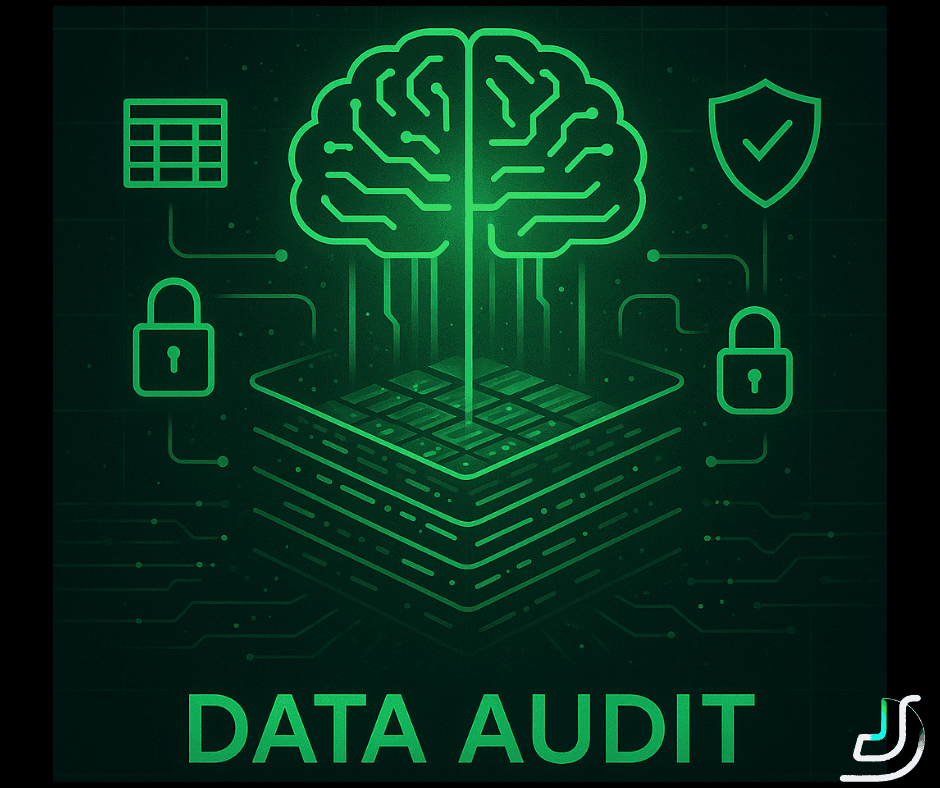
A data audit is the foundation that determines whether AI and analytics investments deliver value or quietly fail. Most enterprise AI projects that overrun trace back to inadequate data audits — projects scoped on assumptions about data quality, accessibility, and compliance that turned out wrong when the engineering work began.
This article maps what a data audit actually is in production engineering terms, why every serious AI or analytics initiative should start with one, the six-step process that consistently produces actionable output, and the tooling we deploy. For broader treatment of data engineering economics, see our data analytics cost article and /services/data-engineering.
What a data audit actually is
A data audit is a systematic assessment of your organization's data assets across four dimensions:
- Inventory — what data you have, where it lives, who owns it
- Quality — accuracy, completeness, consistency, timeliness, validity
- Governance — access controls, lineage, compliance posture, retention policies
- Usability — how easy it is to access, integrate, and analyze for downstream use cases
The output is a prioritized roadmap of data foundation work needed before downstream investments (analytics, ML, AI, business intelligence) can deliver expected ROI.
Data audits aren't compliance checkboxes — they're the prerequisite for capital-efficient data, AI, and analytics investments.
Why data audits matter before AI/analytics investment
Five concrete reasons to audit before scoping:
1. AI projects fail on data, not models. McKinsey research and industry data consistently show 70-80% of AI/ML projects underperform — and root cause is usually data quality, accessibility, or governance issues that were invisible at scoping time.
2. Data prep consumes 25-40% of AI/ML budget. Without an upfront audit, this gets discovered mid-project, blowing timelines and budgets. With an audit, it gets scoped honestly.
3. Compliance gaps are expensive. GDPR fines reach 4% of global revenue. HIPAA violations average $20K+ per record. Audits surface compliance posture before it becomes incident.
4. Hidden cost of data silos. Most enterprises have substantial data — but it's locked in PLCs, SCADA, legacy systems, departmental shadow databases. Audits map the actual data landscape vs. the assumed one.
5. Decisions based on bad data are worse than no decisions. Analytics on stale, biased, or incomplete data produces convincing reports that lead to wrong actions. Audit-driven foundations prevent this.
Six-step process for production data audits
Step 1: Define audit scope and goals
Before any technical work, answer:
- What downstream investments depend on this data? AI projects, BI dashboards, regulatory reporting, customer-facing analytics
- What specific decisions need data support? Risk pricing, fraud detection, demand forecasting, customer segmentation
- What's the success criteria? Specific metrics with measurable baselines
Vague audits ("assess our data") produce vague output. Specific scoping produces actionable findings.
Step 2: Inventory data assets
Map the actual data landscape:
- Source systems — ERP, CRM, data warehouses, departmental databases, SaaS platforms, IoT/operational systems, file stores
- Data domains — customer data, transaction data, operational telemetry, employee records, financial data
- Ownership — which department/team owns which data assets
- Volume and growth rate — current size, growth trajectory, retention requirements
- Schema documentation — what's documented, what's tribal knowledge
Modern audit tooling (data catalogs like Collibra, Alation, Atlan, Unity Catalog) automates substantial parts of this. Without tooling, this step alone consumes weeks of senior engineer time.
Step 3: Assess data quality
Five dimensions to measure:
- Accuracy — does the data correctly represent the real world?
- Completeness — are there missing values, missing records?
- Consistency — is the same fact represented identically across systems?
- Timeliness — is the data fresh enough for its intended use?
- Validity — does the data conform to expected formats, ranges, types?
Sample-based assessment for small datasets, automated profiling tools (Great Expectations, dbt tests, Soda) for larger systems. Quality scores per dataset feed prioritization in Step 6.
Step 4: Map data governance posture
- Access controls — who can see what data, audit logs of access
- Lineage — where each dataset comes from, what transformations have been applied
- Compliance — GDPR, CCPA, HIPAA, SOX, industry-specific regulations applicable to each dataset
- Retention policies — what's kept, for how long, deletion procedures
- Privacy classifications — PII, PHI, financial data, IP, public data
For regulated industries, this step often surfaces compliance gaps that need urgent attention before any AI/analytics deployment.
Step 5: Identify integration and accessibility gaps
- Disconnected silos — data that should be joined but isn't
- Format heterogeneity — same logical data in different formats across systems
- Update frequency mismatch — real-time needs vs. batch source data
- API and integration coverage — what can be accessed programmatically vs. manually
The integration cost in downstream AI/analytics projects is determined here. Underestimate this and projects overrun by 30-50%.
Step 6: Prioritize remediation roadmap
Output of the audit: a prioritized roadmap of data foundation work needed before downstream investments deliver value.
Typical priorities:
- Critical — compliance gaps, data quality issues blocking strategic projects
- High — silos blocking high-value use cases
- Medium — quality improvements that unlock secondary use cases
- Low — nice-to-haves that don't block critical investments
Each remediation item with: scope, estimated cost, time to complete, dependencies, owner. This becomes the data engineering work plan.
Common challenges and how to overcome them
Stakeholder buy-in
Data audits feel like overhead to operational teams. Reframe as protection against expensive AI/analytics failures. Show concrete examples of project failures attributable to inadequate data foundations.
Tooling cost vs. manual labor
Modern data catalog and quality tools (Collibra, Alation, Atlan, Soda, Monte Carlo) cost $50K-$200K+/year. Manual auditing is cheaper upfront but doesn't scale. For organizations with substantial data assets, tooling pays back through reduced audit time and continuous monitoring.
Audit fatigue
Comprehensive audits can take months and produce reports no one reads. Prevent this by tying audit scope to specific downstream investments. The audit isn't valuable in isolation — it's valuable as input to actionable decisions.
Resistance from data owners
Data owners may resist audit findings that reveal quality, governance, or compliance gaps in their domain. Frame as collaborative problem-solving, not blame. Position remediation as resource allocation, not performance review.
Compliance complexity
For regulated industries (healthcare, finance, government), compliance assessment alone can be 30-40% of audit work. Engage compliance specialists early. Don't assume general data engineers can handle SR 11-7, HIPAA Business Associate Agreements, or GDPR Article 30 records of processing.
Tools and technologies for data audits
The tooling landscape:
Data catalogs: Collibra, Alation, Atlan, Unity Catalog, AWS Glue Data Catalog, Microsoft Purview. Inventory and metadata management.
Data quality: Great Expectations, Soda, dbt tests, Monte Carlo, Datafold. Automated quality checks and observability.
Data lineage: OpenLineage-compatible tools, DataHub, Atlan, Manta. Tracking how data flows through transformations.
Governance and compliance: OneTrust, BigID, Securiti.ai for PII discovery and classification. Industry-specific compliance tools for HIPAA, GDPR, etc.
Profiling: Pandas Profiling, Apache Griffin, Deequ for understanding data distributions and patterns.
For most enterprise audits, a combination of catalog + quality + lineage tools provides the foundation. Specific compliance tooling adds where regulatory load demands.
Three audit deployment scenarios
Small business audit (single domain)
Profile: 50-500 employees, single data domain, basic compliance needs.
Approach: Manual audit by 1-2 engineers, basic tooling, 2-4 week timeline.
Cost: $20K-$50K.
Mid-size enterprise audit (multi-domain)
Profile: 500-5,000 employees, multiple departments, mixed compliance posture, modernization initiative driving audit.
Approach: Combined manual + automated tooling, 6-12 week timeline, dedicated audit team.
Cost: $80K-$250K.
Enterprise platform audit (regulated)
Profile: 5,000+ employees, complex multi-source data, regulatory compliance (HIPAA, SOX, GDPR, industry-specific), preparation for major AI/data initiatives.
Approach: Comprehensive automated tooling deployment, 12-24 week timeline, cross-functional team including compliance specialists.
Cost: $300K-$1M+.
On a final note
Data audits aren't optional for serious AI or analytics initiatives. The teams that audit before scoping consistently deliver projects on time and on budget. The teams that skip the audit step consistently overrun and underdeliver.
The audit isn't bureaucracy — it's the engineering discipline that makes downstream investments capital-efficient. For organizations contemplating AI, advanced analytics, or major data platform modernization, a properly scoped audit is the highest-leverage upfront investment.
Ready to scope a data audit? Run the Project Estimator for a deterministic ballpark, or book a 45-minute Discovery with our data engineering team — we'll review your data landscape, downstream investment plans, and compliance posture, and tell you honestly what scope of audit your organization actually needs.
Talk to the team behind this
Building something like this in production?
Our senior engineers ship this kind of work for real teams. 45-minute call, no pitch deck — just architecture, trade-offs, and whether we're the right fit for your problem.