
900 Fake Trade-In Orders in One Night: How Prepaid Label Harvesting Works
A device trade-in store received about 900 fake orders in a few hours. Each one made the store buy a prepaid USPS label. Payment-fraud tools saw nothing, because a trade-in order has no payment. How the attack works, what the store can recover, and five fixes you can apply this week.
A device trade-in store we work with got about 900 new orders in a few hours, at night. None of them was real.
The store buys used phones and laptops. A customer fills in a form and accepts a quote, and the store emails a prepaid USPS label so the customer can ship the device in. The fake orders existed to collect those labels. Each order produced one, paid from the store's postage account.
The owner traced the orders afterwards. The IP addresses pointed to Hong Kong. No devices arrived. The postage charges did, and the store did not get that money back.
Why nothing flagged it
In a trade-in order the customer pays nothing. The store is the one paying, for the label. Fraud tools for online stores score payments: the card, the billing address, the behaviour at checkout. Here they had no payment to score.
The store's own setup did the rest. It bought a label the moment an order came in, with no person in between. Nine hundred orders meant nine hundred purchases before anyone was awake.
What a harvested label costs you
The owner's numbers: $5 to $7 per label. When a label travelled on a bigger or heavier parcel than it was bought for, the bill for that label rose to $20 or $30. USPS measures parcels in its network and charges the difference when a parcel does not match its label. The programme is called Automated Package Verification.
We do not know who used those labels, or how. We do know that cheap USPS postage has a large black market. In September 2026 a federal judge ordered the seizure of LabelsBank.com, a site that had sold more than 5.1 million counterfeit labels to more than 5,000 customers at about $2 each, for a loss of more than $126 million (FreightWaves). The USPS Office of Inspector General estimates that counterfeit labels cost the Postal Service $3.1 billion between March 2024 and February 2026 (Value Added Resource). Our reading: in a market like that, a label a real business has already paid for has a buyer.
Can you get the money back?
This store did not. It paid for every label from that night, whether anyone used it or not.
On paper the platforms allow more. Shopify lets you void a label up to 30 days after purchase if it has no tracking events. ShipStation gives 28 days for USPS and refunds only labels the carrier never picked up or scanned. EasyPost refunds a USPS label if you request it within 30 days and USPS has not scanned it, and the money takes at least 15 days to come back. None of these refunds happens by itself: someone has to ask, label by label or in a batch. Check what your own label provider says before you count on any of them.
Void the labels anyway, and do it in the first hour. A voided label is one that nobody can put on a 30-pound box at your expense. Once USPS scans a label, we found no refund rule that covers it.
Who is exposed
Any business that issues a prepaid label by itself, to a person it has not verified, before a member of staff looks at the request:
- device trade-in and buyback
- mail-in repair
- self-service returns portals
- warranty and RMA desks
We searched for public reports of this attack against businesses like these and found none: no carrier statement, no forum thread, no name for it. It may be rare. Owners may also file it under "shipping bill" and never write about it. If it happened to you, we would like to hear how it went.
Five fixes you can apply this week
- Bill inbound labels on scan. With USPS Returns you pay per label scanned, so a harvested label nobody uses costs you nothing. Shippo, EasyPost and others sell the same model. A label that does get used still bills you.
- Send a code where you can, in place of a label file. With USPS Label Broker the customer brings a QR code or an ID to the Post Office and the label prints there.
- Put a challenge and a rate limit on the order form. One address should not be able to submit a hundred requests in ten minutes.
- Add a volume rule. When orders arrive far faster than your normal hour, stop creating labels and alert a person. On Shopify, Flow can hold fulfillment orders.
- Reconcile every week. Compare the labels USPS scanned with the devices that reached you.
What we built for this store
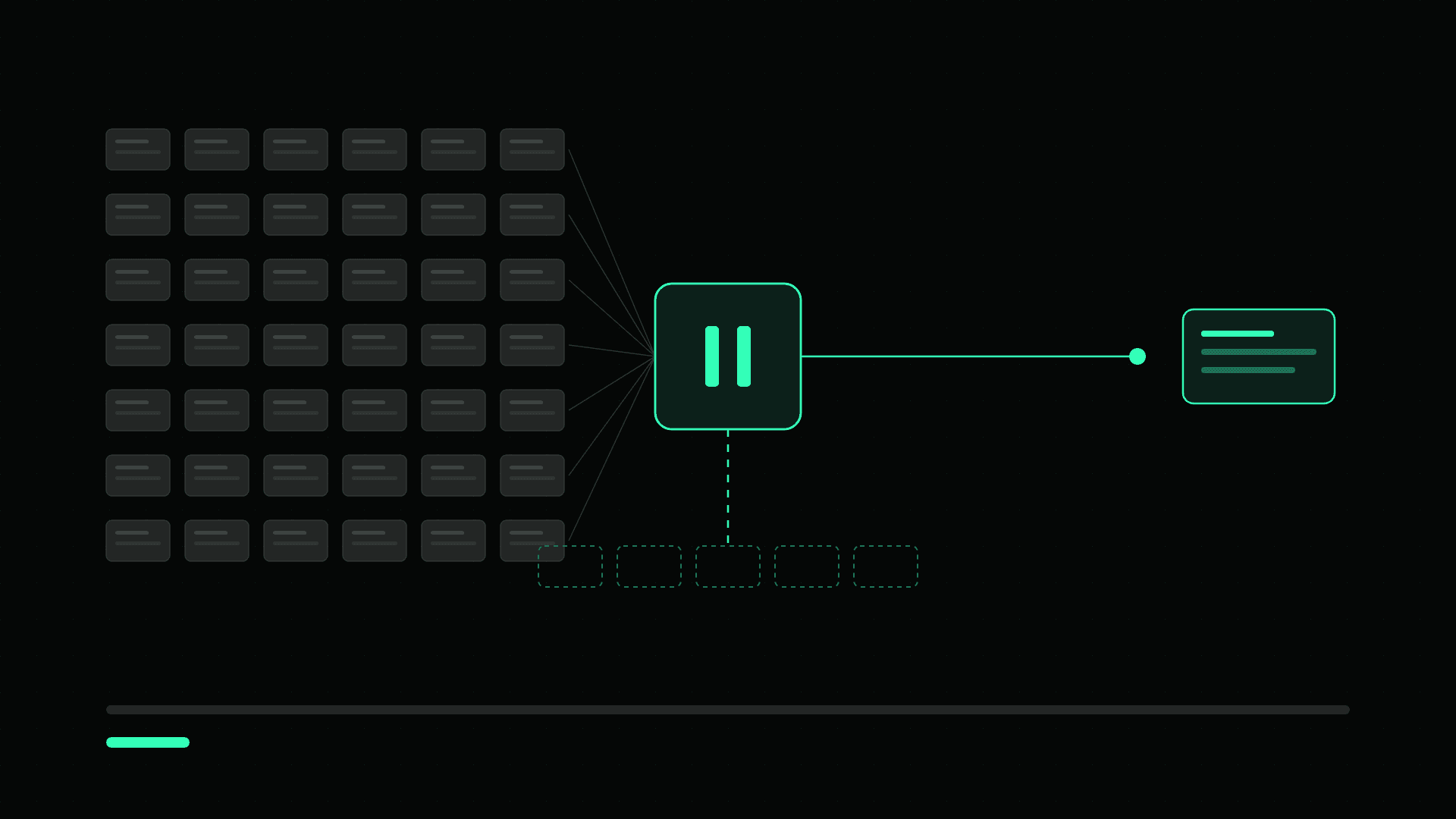
After that night we built a guard that sits between the order and the label. It watches orders as they arrive, weighs several signals at once, tracks where the requests come from, and holds anything suspicious for a person to review. No label exists until someone approves the order. It runs in the store today.
We are adding a second step now. When part of a burst gets through before the hold starts, the guard will file the refund requests for those labels within the hour, so nobody has to remember the 30-day window.
If your business issues prepaid labels by itself and you want the same guard, or a second pair of eyes on your order flow, write to us.
Talk to the team behind this
Building something like this in production?
Our senior engineers ship this kind of work for real teams. 45-minute call, no pitch deck — just architecture, trade-offs, and whether we're the right fit for your problem.