
Generative AI for marketing: production patterns that ship
Where GenAI is genuinely shipping in marketing today — six production patterns, the brand-safety guardrails required, and the ROI math that determines investment.
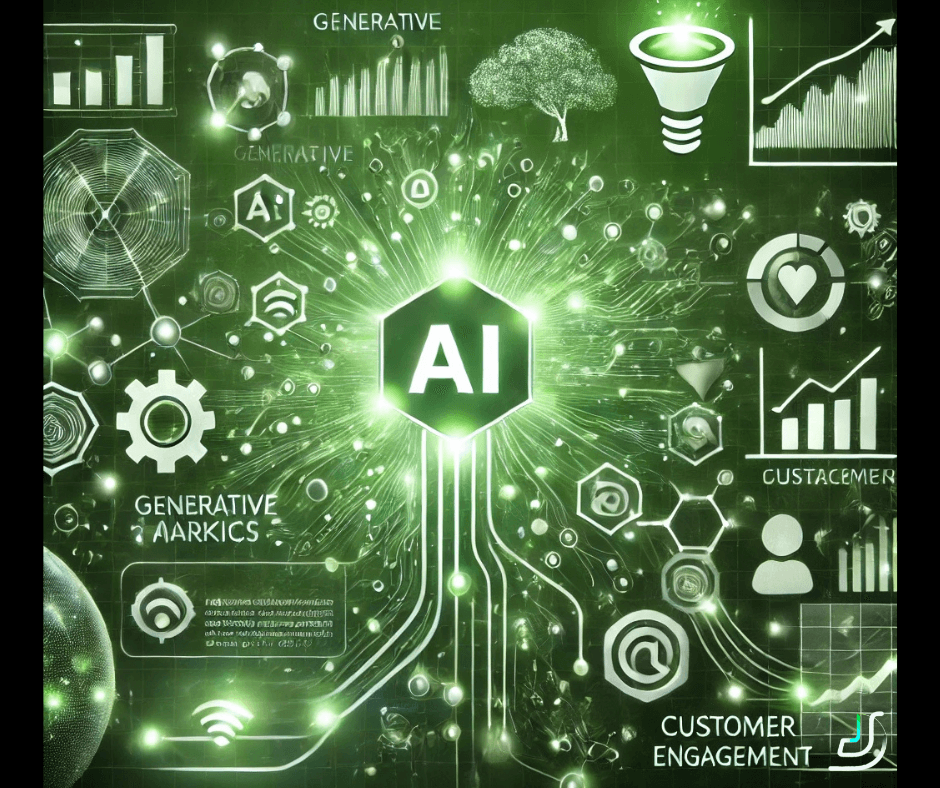
GenAI has transformed marketing operations faster than almost any other enterprise function. Adobe Firefly drives 577% ROI for businesses deploying it. Marketing content production cost has dropped 50-80% in deployed organizations. The opportunity is real — but most enterprise marketing GenAI deployments underperform, producing content that doesn't differentiate or burning marketing teams out trying to manage AI output quality.
This article maps where GenAI is genuinely shipping in marketing today — six production patterns with brand-safety guardrails and ROI math. For broader GenAI cost framing, see calculating the cost of generative AI and evaluating GenAI cost vs value.
Six production patterns in marketing GenAI
1. Content drafting at scale
GenAI drafts blog posts, social content, ad copy, email campaigns, product descriptions — with human marketers reviewing, refining, and approving.
Reference deployments: Adobe Firefly for enterprise content workflows, Jasper for marketing-specific content generation, ChatGPT/Claude/Gemini direct usage in marketing teams.
ROI math: content production cost drops 50-80% per piece. Quality varies — generic AI output is poor; brand-aligned with proper prompting and review is strong.
2. Personalization at scale
GenAI generates personalized content variants — emails tailored to customer segments, ad copy variations for different audiences, dynamic landing pages.
Production patterns: customer data + foundation models + brand guardrails generate variants; A/B testing infrastructure measures performance; winning variants get promoted automatically.
Impact: higher conversion rates, better customer engagement, more efficient marketing spend.
3. Visual content generation
DALL-E, Stable Diffusion, MidJourney, Imagen for image generation. Sora, Veo, Runway for video. Used for ad creative, social content, blog imagery, product visualization.
Production patterns: brand-trained models (Adobe Firefly's brand training, custom fine-tuning) generate on-brand visual content. Human creative direction sets concept; AI produces variants.
Impact: dramatic reduction in stock photo dependency, faster creative iteration, broader visual content library.
4. SEO and content optimization
GenAI assists with keyword research, content optimization, meta description generation, schema markup, internal linking strategy.
Production patterns: integration with SEO tools (Surfer, Clearscope, Ahrefs) plus foundation models for content analysis and recommendation generation.
Impact: better SEO performance, more efficient content team, broader keyword coverage.
5. Customer feedback analysis
GenAI processes customer reviews, support tickets, social media mentions to surface insights, identify trends, prioritize improvements. See our sentiment analysis article for deeper treatment.
Production patterns: classifier models for sentiment + extraction models for theme identification + LLM-based summarization for executive-readable insights.
Impact: faster identification of customer issues, better prioritization of product improvements, real-time brand monitoring.
6. Competitive intelligence
GenAI monitors competitor content, pricing, marketing campaigns, product launches at scale.
Production patterns: automated web scraping + GenAI extraction and analysis + alerting on significant changes.
Impact: faster competitive response, better positioning intelligence, reduced manual research workload.
Brand safety guardrails non-negotiable
Brand voice consistency
AI content without brand training produces generic output that dilutes brand identity. Mitigation:
- Brand voice documentation embedded in prompts
- Brand-trained models (custom fine-tuning where economics justify)
- Style guides as evaluation criteria
- Human editorial review for any customer-facing output
Factual accuracy
Marketing claims that turn out to be wrong create legal liability and brand damage. Hallucination mitigation:
- RAG grounding for claims requiring evidence
- Mandatory fact-checking for any specific statistic, attribution, or product claim
- Refusal templates for claims AI can't verify
Tone and empathy in sensitive contexts
AI content in sensitive domains (healthcare, finance, mental health, social issues) requires stricter review. Tone-deaf or insensitive content damages brands quickly.
IP and copyright concerns
AI training data may include copyrighted material. Output may inadvertently reproduce protected content. Mitigation:
- Use commercial-licensed AI tools (Adobe Firefly, OpenAI's commercial tier)
- Originality checks on AI output
- Legal review for high-stakes content
Bias monitoring
AI inherits training data bias — gender, race, age, socioeconomic. Marketing content amplifies bias if not actively monitored.
ROI math that determines investment
The decision framework for marketing GenAI investment:
Investment scope:
- Foundation model API costs ($500-$50K/month depending on volume)
- Brand training and customization ($30K-$200K initial)
- Workflow integration ($30K-$150K)
- Team training and adoption ($20K-$80K)
- Ongoing operations and quality monitoring
Expected returns:
- Content production cost reduction: 50-80% per piece
- Time-to-market acceleration: 30-70% for typical marketing content
- Personalization at scale: 10-30% conversion lift typical
- SEO performance: variable, often 20-50% organic traffic improvement
The math typically favors GenAI investment for marketing teams producing 50+ content pieces per month. Below that volume, off-the-shelf AI tools provide most of the value without custom investment.
Three deployment scenarios
Small marketing team: Off-the-shelf AI tools (ChatGPT Team, Claude, Jasper) plus basic workflow integration. $10K-$30K initial + $5K-$20K/year tooling.
Mid-size marketing org: Brand-trained content workflows, integration with marketing automation, A/B testing infrastructure. $80K-$250K initial + $60K-$150K/year operations.
Enterprise marketing platform: Custom-trained models, comprehensive workflow automation, multi-channel orchestration, advanced personalization. $300K-$1M+ initial + $200K-$500K+/year operations.
Final framing
Marketing GenAI is past hype cycle and into measurable production impact. The marketing teams winning in their categories invest in disciplined GenAI deployment — brand-trained tools, quality review processes, ROI measurement, ongoing optimization. The teams chasing every new AI tool without discipline produce generic content that doesn't move metrics.
The compound benefits over years are substantial. Marketing teams that build GenAI capabilities now will dominate their categories by 2027 — both in cost economics and content effectiveness.
Ready to scope a marketing GenAI project? Run the Project Estimator for a deterministic ballpark, or book a 45-minute Discovery with our GenAI engineers — we'll review your marketing operations, brand requirements, and ROI targets, and tell you honestly which deployments fit your scope.
Talk to the team behind this
Building something like this in production?
Our senior engineers ship this kind of work for real teams. 45-minute call, no pitch deck — just architecture, trade-offs, and whether we're the right fit for your problem.