
Facial recognition: production patterns, applications, and regulatory reality
Where facial recognition is genuinely deployable in 2026 — five production use cases, the privacy and regulatory load, and the architectural patterns that pass legal review.

Facial recognition technology is mature — but its deployability is determined by privacy regulations, ethical considerations, and reputational risk, not technical capability. The companies winning with facial recognition deploy narrow, consent-based applications with rigorous privacy engineering. The companies that try broad deployment without these guardrails face regulatory action, legal liability, and brand damage.
This article maps where facial recognition is genuinely deployable in 2026 — five production use cases, the privacy/regulatory load, and the architectural patterns that pass legal review. For broader CV framing, see computer vision applications across industries.
What facial recognition actually does
Facial recognition combines several distinct capabilities, each with different regulatory and ethical implications:
- Face detection — locating faces in images (lowest privacy concern)
- Face verification — confirming a face matches a specific identity (1:1 matching)
- Face identification — matching a face against a database of known identities (1:N matching, highest privacy concern)
- Face attribute analysis — extracting demographics, emotions, age (substantial bias and regulatory concern)
- Anti-spoofing / liveness detection — distinguishing real faces from photos/videos
The regulatory landscape treats these very differently. 1:1 verification with explicit consent is broadly deployable. 1:N identification, especially without consent, faces increasing regulatory restriction.
Five deployable production use cases
1. Authentication and identity verification
Verifying user identity for account access, financial transactions, document verification. Replaces or augments traditional authentication with biometric verification.
Reference deployments: Apple Face ID, Microsoft Windows Hello, financial KYC platforms (Onfido, Jumio, Persona), border control systems.
Production patterns: 1:1 verification (face vs. enrolled template), liveness detection to prevent spoofing, on-device processing where possible, encryption of biometric templates.
Regulatory landscape: broadly deployable with explicit user consent. GDPR allows processing under "explicit consent" basis. US state laws (BIPA in Illinois especially) require disclosure and consent.
Impact: reduced fraud, faster onboarding, better user experience, lower customer acquisition cost.
2. Employee access control
Securing physical premises and digital systems via facial recognition for employee access. Increasingly common in enterprise settings.
Production patterns: opt-in employee enrollment, on-premises processing, integration with existing access control systems, audit logging for compliance.
Critical: employee biometric data has strict regulatory requirements (BIPA, similar state laws, EU AI Act provisions). Wrongful processing creates substantial legal liability.
3. Mobile device authentication
Face unlock for personal devices — Apple's Face ID being the most widely deployed example. On-device processing with strict privacy guarantees.
Production patterns: all biometric processing on-device, biometric data never leaves user's hardware, strict OS-level access controls.
Why this works: privacy-by-design architecture eliminates most regulatory concerns. Users own their biometric data; no centralized database creates breach risk.
4. Photo organization (consumer applications)
Organizing personal photo libraries by face for individual users. Apple Photos, Google Photos use on-device processing.
Production patterns: on-device clustering, no cloud-based identity database, user controls over face data.
5. Healthcare patient identification
Verifying patient identity at care points to reduce medical errors and fraud.
Production patterns: opt-in patient enrollment, healthcare-specific privacy controls, integration with EHR systems, HIPAA compliance.
Reference deployments: various healthcare facilities using facial recognition for patient identification with measured outcomes (reduced medical errors, improved billing accuracy).
Use cases facing regulatory restriction
Public surveillance and law enforcement
Government deployment of facial recognition for public surveillance faces increasing restriction:
- EU AI Act: real-time biometric identification in public spaces largely prohibited
- US: patchwork of state and city restrictions (San Francisco, Boston, Portland have bans or moratoriums)
- UK: Live Facial Recognition by police restricted under court rulings
The regulatory direction is clear: deployment without strong legal basis and procedural safeguards faces increasing constraint.
Retail customer tracking without consent
Tracking customers in stores via facial recognition without explicit consent faces:
- BIPA lawsuits in Illinois (substantial damages awarded against retailers)
- GDPR enforcement in EU (fines for non-consensual processing)
- Reputational damage from media coverage
Many retailers have shifted from facial recognition to anonymous pose tracking or aggregated analytics that don't identify individuals. See our pose estimation article.
Emotion and demographic inference
AI inferring emotion or demographic characteristics from faces faces:
- Bias concerns (validated across multiple studies showing differential accuracy by demographic)
- Regulatory restriction (EU AI Act prohibits emotion recognition in workplaces and education)
- Limited scientific validity for emotion classification
Most enterprise deployments avoid these capabilities or restrict them to narrow validated applications.
Architectural patterns that pass legal review
Privacy-by-design
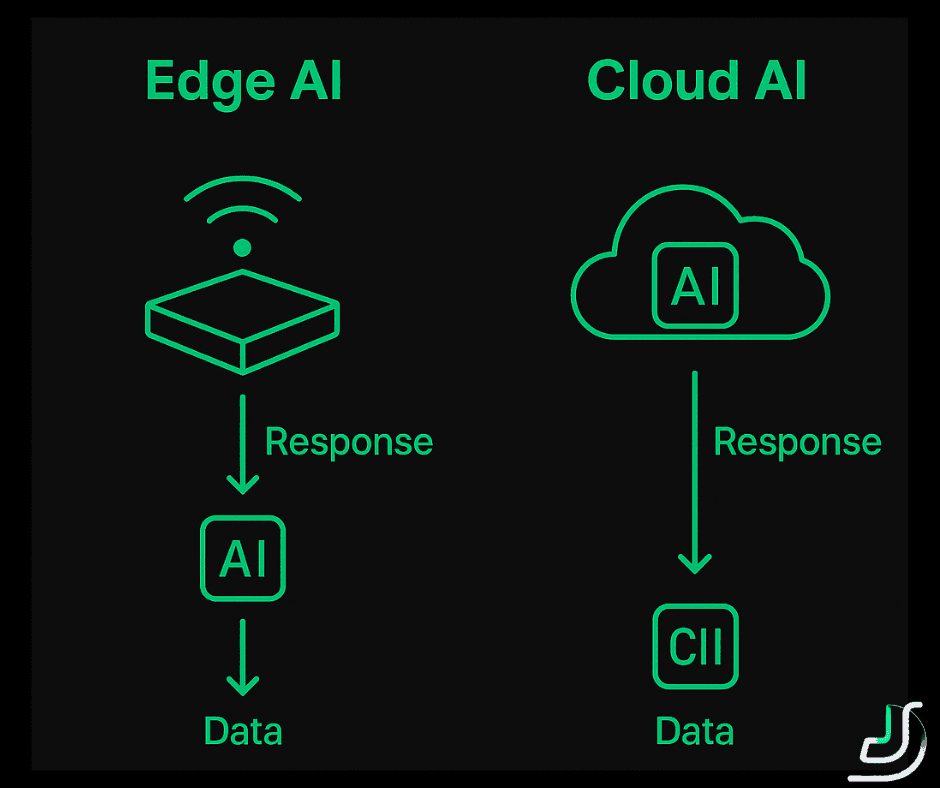
- On-device processing where possible
- Encryption of biometric templates with customer-managed keys
- No raw biometric data storage (only mathematical templates)
- Strict access controls on identity databases
- Comprehensive audit logging
Explicit consent
- Clear, specific, informed consent for biometric processing
- Consent must be granular (separate from general terms of service)
- Withdrawal of consent must be straightforward
- Documentation of consent for regulatory audit
Bias monitoring
- Validation of accuracy across demographic groups (age, gender, ethnicity)
- Continuous monitoring of false-positive and false-negative rates by demographic
- Remediation when bias exceeds thresholds
- Transparent reporting of accuracy metrics
Retention limits
- Define retention periods aligned with use case
- Automatic deletion of biometric data when no longer needed
- Compliance with sector-specific retention requirements
Vendor due diligence
- Vetting facial recognition vendors for accuracy, bias, security
- Contractual requirements for data handling
- Right to audit vendor practices
- Avoiding vendors with controversial training data sources
Tooling we deploy
Cloud-based facial recognition:
- AWS Rekognition (with appropriate compliance configuration)
- Azure Face API
- Google Cloud Vision
On-device facial recognition:
- Apple Vision framework
- Android face detection APIs
- TensorFlow Lite face models
Specialized identity verification:
- Onfido, Jumio, Persona for KYC
- Veriff, IDnow for European deployments
- BioCatch for behavioral biometrics
Anti-spoofing / liveness:
- iProov, FaceTec for liveness detection
- Custom liveness detection on specific hardware
For most enterprise deployments, the toolchain combines: identity verification platform for KYC + on-device authentication for user-facing apps + cloud APIs for backend verification.
Three deployment scenarios
Identity verification (KYC): Commercial KYC platform integration. $40K-$120K initial + per-verification fees.
Enterprise access control: On-premises facial recognition + integration with existing access systems + employee opt-in workflow + audit logging. $150K-$400K initial + $80K-$200K/year.
Multi-jurisdiction deployment: Comprehensive privacy engineering + compliance across multiple regulatory regimes + ongoing monitoring. $500K-$1.5M+ initial + $300K-$700K+/year.
Final framing
Facial recognition is technically mature but legally and ethically constrained. The companies deploying it successfully scope narrow, consent-based applications with rigorous privacy engineering. The companies that try broad deployment without these guardrails face regulatory action and brand damage.
The technology is real. The deployment discipline required is substantial. Match deployment to use cases where privacy-by-design architecture and explicit consent are practical.
Ready to scope a facial recognition project? Run the Project Estimator for a deterministic ballpark, or book a 45-minute Discovery with our computer vision engineers — we'll review your use case, regulatory landscape, and privacy requirements, and tell you honestly which deployments are feasible.
Talk to the team behind this
Building something like this in production?
Our senior engineers ship this kind of work for real teams. 45-minute call, no pitch deck — just architecture, trade-offs, and whether we're the right fit for your problem.