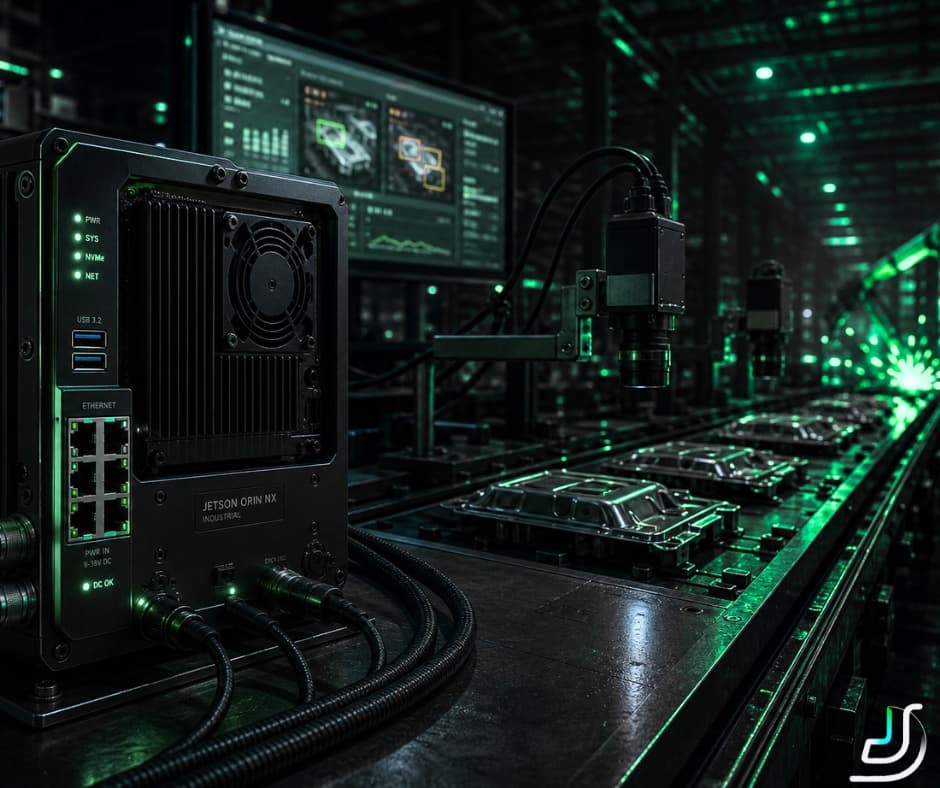

Edge AI: how edge computing empowers a new wave of artificial intelligence
Edge AI is the architectural answer to latency, data residency, and connectivity constraints — what it is, where it ships in production, and the hardware/software trade-offs that determine whether the deployment scales.
Edge AI isn't a niche — it's the architectural answer to three constraints that cloud-based AI can't solve: latency budget under 100ms, data residency for regulated workloads, and operating where connectivity is unreliable or expensive. When any of these constraints binds, edge AI is the right architecture. When none bind, cloud is usually cheaper and easier to operate.
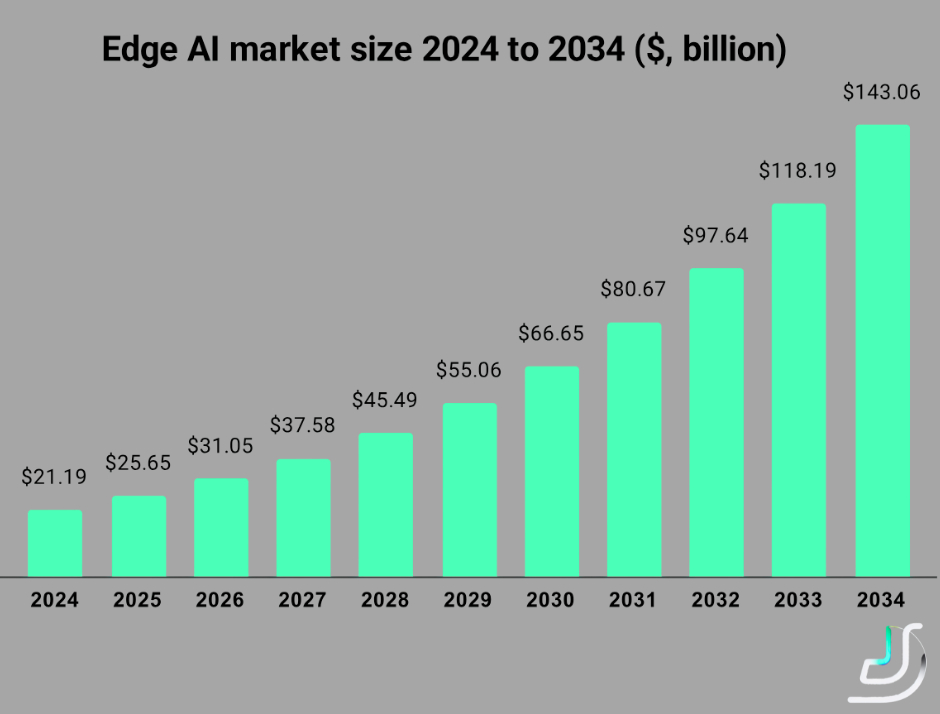
The market reflects the trend. The global edge AI market was $21.19B in 2024, projected to reach $143B by 2034 (21% CAGR). Approximately 20% of enterprises adopted edge AI in 2024, with that number expected to double in 2025. The shift is driven by the same factors that limit cloud-only AI: high latency, expensive cloud compute at scale, and growing regulatory pressure on data residency.
This article maps what edge AI is, the hardware and software stack that enables it, the production use cases shipping today (with two JustSoftLab portfolio examples), and the implementation challenges to plan for.
What edge AI is and how it differs from cloud AI
A standard IoT architecture has three layers: the things (sensors, cameras, devices generating data), the gateways (centralized devices like routers connecting things to the cloud), and the cloud itself. Edge devices and gateways together make up the edge layer.
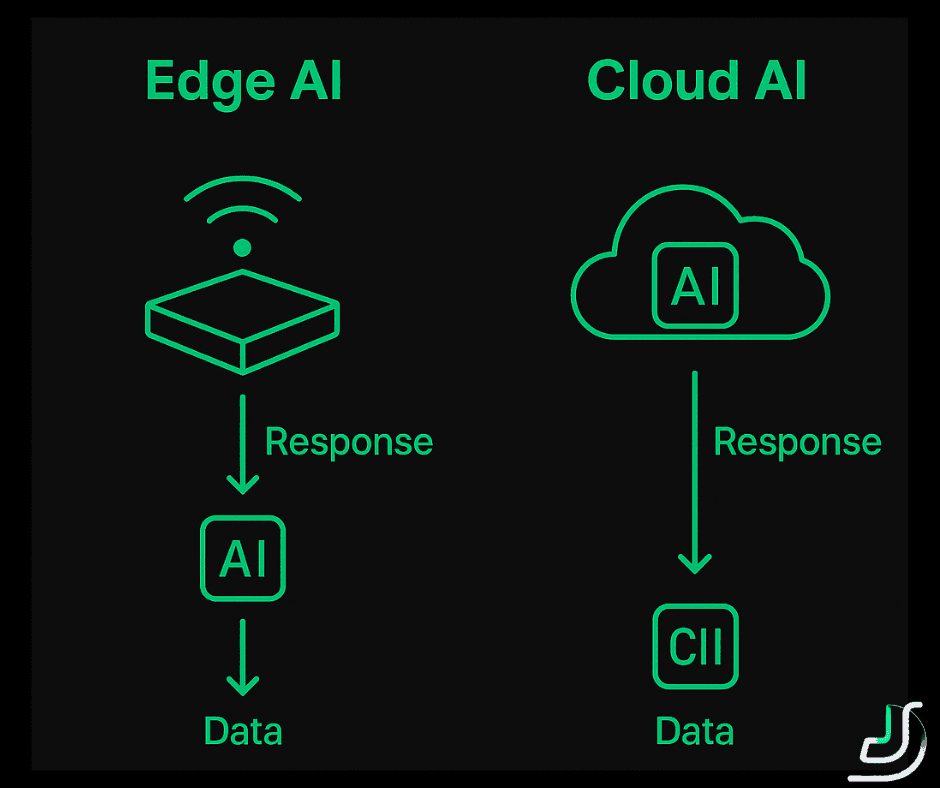
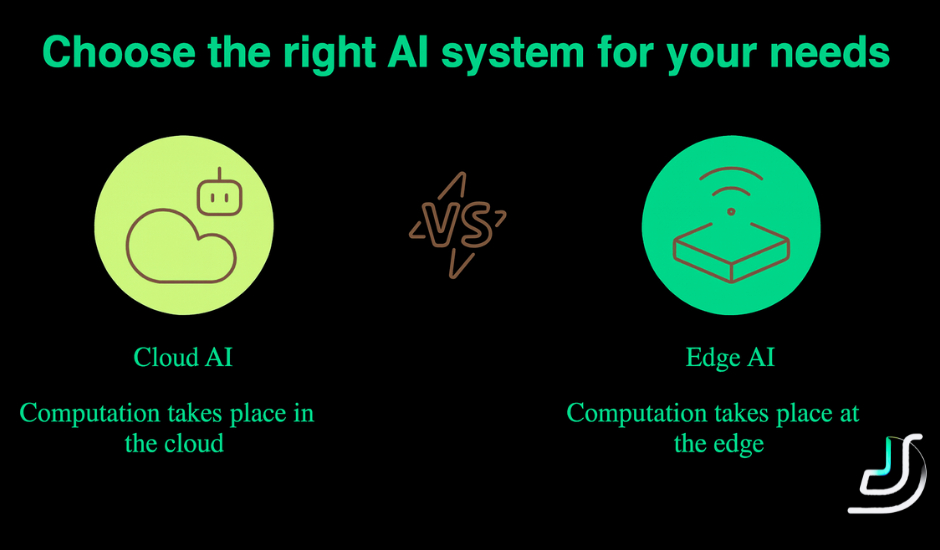
Edge AI deploys AI algorithms close to the network edge — on connected devices (end nodes) or gateways (edge nodes) — instead of in the cloud. Decisions happen in milliseconds. Data stays local unless the architecture explicitly moves it.
The cloud-vs-edge decision depends on your specific workload. Cloud is the right architecture when training data is large, models are heavy, latency tolerates network round-trips, and connectivity is reliable. Edge wins when latency is tight, data residency or privacy demands local processing, or operations need to continue without connectivity.
Five concrete benefits of edge AI
Lower processing latency. No round-trips to the cloud. Critical for time-sensitive applications — medical devices, driver assistance, factory floor safety, real-time fraud detection.
Reduced bandwidth and operational cost. Sensor data stays local; only metadata or alerts go to the cloud. A reference example: a large manufacturer running cloud-first anomaly detection on 50 GPUs across 100 concurrent streams reached $224K hardware cost per site — prohibitive for multi-site rollout. Switching to edge-first architecture with quantization techniques cut GPU count to 4 with 92% cost reduction.
Data residency and security. Local processing reduces exposure during transmission. Particularly valuable in regulated workloads (HIPAA, GDPR, SR 11-7) where data residency is a hard requirement.
Operational reliability. Continues running during network disruptions or cloud outages. Critical for safety-critical systems (autonomous vehicles, medical devices, factory automation).
Lower energy consumption. Local processing typically consumes less energy than cloud round-trips, extending battery life on edge devices and reducing overall power footprint.
How edge AI works in production
Most production edge AI systems are hybrid — edge handles inference; cloud handles training and model updates.
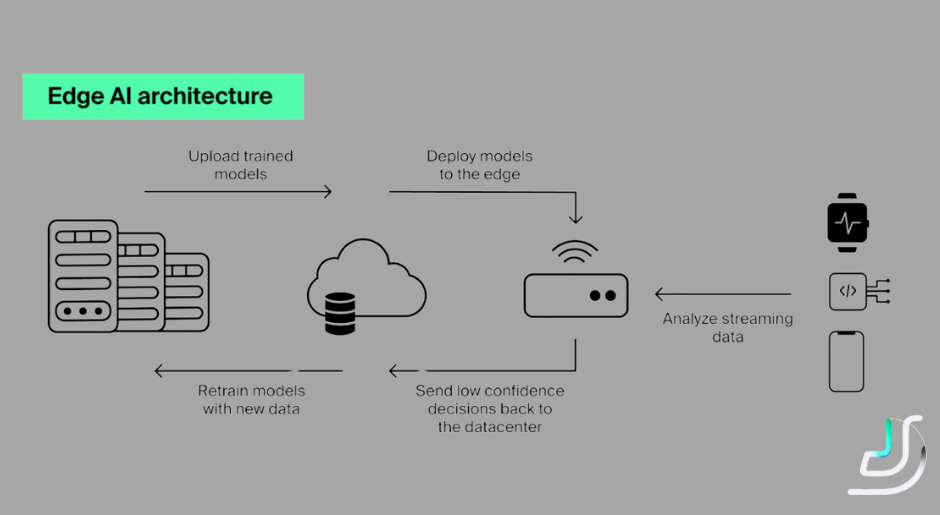
The architectural pattern:
- Train deep learning models in the cloud where compute is cheap and data is centralized
- Deploy the trained models to edge or end devices for autonomous inference
- Send feedback (model performance issues, edge cases, new data) back to the cloud
- Retrain models in the cloud, then push updated models to edge devices
This feedback loop maintains accuracy as the operating environment evolves. The discipline matters: edge models that don't get retrained drift over time as the data distribution shifts.
Hardware that enables edge AI
Four primary hardware options for edge AI processing, each with different trade-offs:
- ASICs (application-specific integrated circuits): high processing capability with high energy efficiency. Good fit for narrow, high-volume edge workloads. Examples: NVIDIA Jetson, Apple Neural Engine, Google Edge TPU, Hailo-8.
- CPUs and GPUs: high cost but proven for latency-critical workloads. Used in autonomous vehicles, ADAS systems, high-end robotics. Examples: NVIDIA Drive, Qualcomm Snapdragon Ride, Tesla FSD chip.
- FPGAs (field-programmable gate arrays): combine processing power, energy efficiency, and flexibility. Programmable hardware that follows software instructions, allowing reconfigurability without hardware changes. Examples: Xilinx (now AMD) Versal, Intel Stratix.
- NPUs / neural accelerators: specialized for neural network inference. Purpose-built for edge AI deployments, increasingly common in consumer devices.
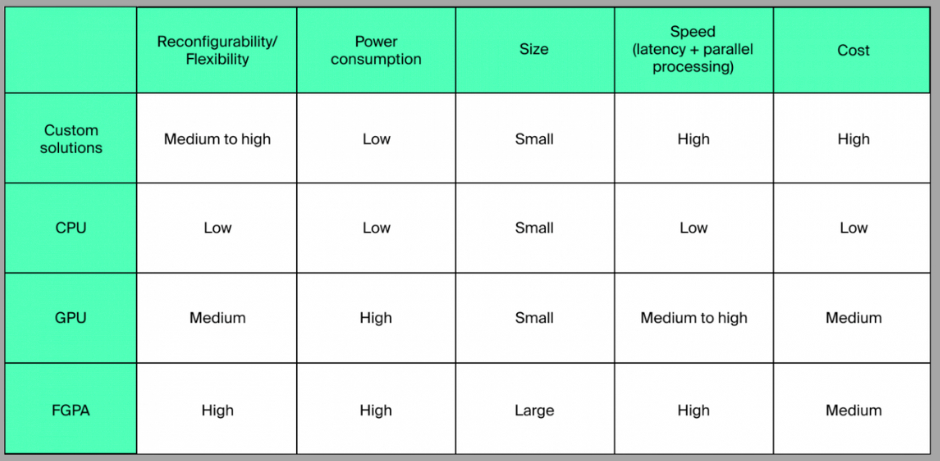
Selection criteria: reconfigurability, power consumption, physical size, processing speed, hardware cost. Most production deployments combine multiple hardware classes — ASICs for primary inference, CPU for orchestration, GPU for handling occasional heavy workloads.
Software stack
Edge AI software spans the full ML pipeline adapted for resource-constrained environments:
- Storage — local data persistence with bounded retention
- Data management — efficient streaming pipelines that minimize memory footprint
- Inference engines — TensorFlow Lite, ONNX Runtime, OpenVINO, PyTorch Mobile, Apple CoreML
- Networking — efficient cloud sync for model updates and metadata transmission
- Model optimization — quantization, pruning, knowledge distillation that compress cloud-trained models to fit edge hardware
For deeper treatment of model optimization techniques (especially distillation for SLM deployment at the edge), see our small language models article.
Six industries shipping edge AI today
Healthcare
Real-time medical diagnostics processed at the device, supporting clinical decisions without cloud latency. Critical when diagnostic decisions need to happen during the procedure, not after a network round-trip.
Reference deployment: Medtronic partnered with NVIDIA to integrate edge AI into its GI Genius™ Endoscopy Module for real-time colorectal lesion detection during colonoscopy procedures. Provides immediate visual markers for potential polyps, including small flat ones the human eye misses.
The architectural pattern: lightweight CV model running on the endoscopy device, inferring at frame rate, with audit logging back to hospital systems for compliance and clinical review.
Retail
Smart checkout systems, inventory management, customer behavior analytics — all benefiting from low-latency local inference.
Reference deployment: Amazon's Just Walk Out technology. Computer vision processes shopper movements and item selections in real time, eliminating the checkout step entirely. Edge processing is essential — the latency budget for "did the shopper take this item" is sub-second.
Manufacturing
For broader treatment of JustSoftLab manufacturing capabilities, see /industries/manufacturing.
Real-time quality control, predictive maintenance, factory floor safety monitoring. Edge AI enables decisions on the production line where downtime cost is high and connectivity to remote facilities can be unreliable.
Reference deployments: Fero Labs runs ML models on existing factory equipment for real-time quality control and predictive maintenance, contributing to 35% average CO₂ emission reduction on customer deployments. BMW combines edge computing and AI for real-time factory floor visibility through smart cameras throughout assembly facilities.
Automotive
Autonomous vehicles and ADAS rely on edge AI for safety. Sensor data (cameras, radar, LiDAR, GPS) generates volumes that can't realistically be sent to the cloud at the latency budget required for safe operation. Object detection, tracking, location awareness, trajectory prediction — all happen at the edge.
Consumer electronics
Smart home devices, wearables, smart appliances. Edge AI handles voice commands, face recognition, gesture detection, personalization without cloud round-trips.
JustSoftLab portfolio: AI-powered fitness mirror with personal coach
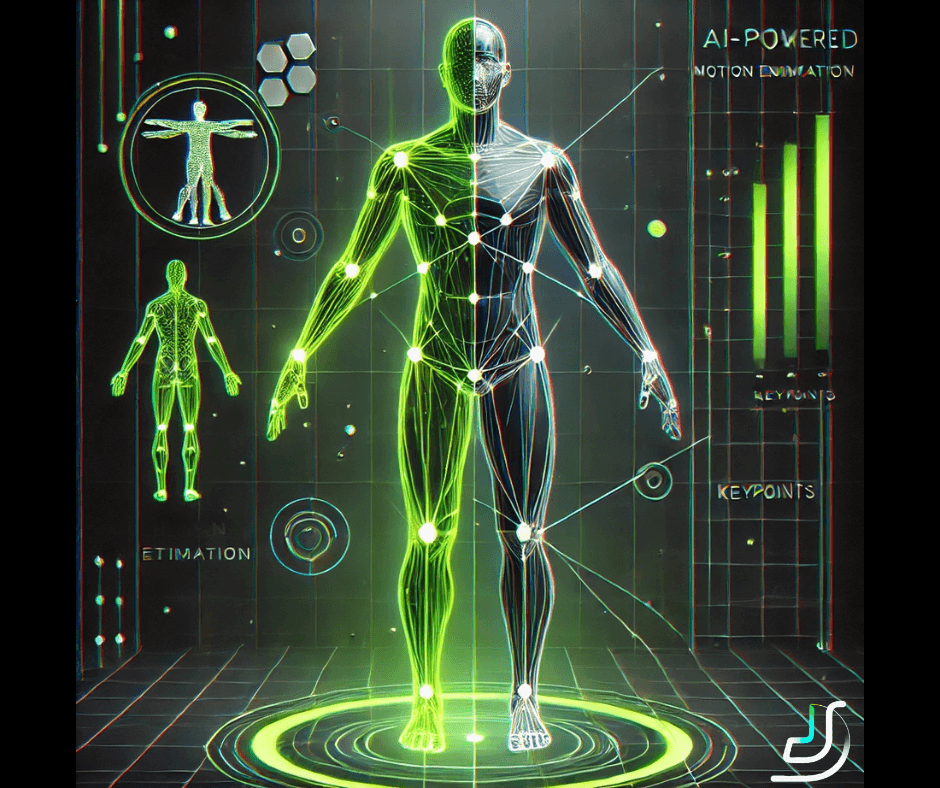
We built a smart fitness mirror combining 3D cameras, IoT sensors, and an AI-powered operating system. Deep learning models trained on hundreds of hours of workout footage deliver dynamic coaching that adjusts to the user's form. The AI tracks user movement, analyzes performance, and provides personalized feedback in real time.
The optimization breakthrough: our algorithms now deliver accurate feedback after training on just 2-3 short videos vs. the previous requirement of 100+ hours of footage. This significantly reduces engineering effort and cost of scaling the exercise library.
Why edge AI: for instant feedback and uninterrupted training, we deployed the AI models directly into the mirror's embedded system. Computer vision data and AI inference run locally — counting reps in real time, correcting form, adapting workouts — without dependence on cloud connectivity. The edge-native architecture continuously refines workout experience based on prior sessions while maintaining responsiveness, privacy, and security.
Security
Facial recognition, motion detection, anomaly detection. Camera footage processed at the camera, with only events of interest sent upstream.
JustSoftLab portfolio: AI-powered theft detection for retail
For small retailers facing rising shoplifting losses, we built an AI-powered monitoring solution for real-time theft detection. Integrates with existing IP and analog CCTV systems. Detects suspicious behavior, issues automated alerts, ensures secure data handling per privacy standards. Includes the ASCONE protocol for standardized event communication and structured alert sharing with law enforcement. Staff interface for live alerts, incident logs, captured evidence (footage, faceprints).
Custom ML models trained on retail theft data using Amazon SageMaker detect suspicious activity, classify incidents, deliver real-time alerts via WhatsApp.
Why edge AI: we used AWS Panorama and Lenovo ThinkEdge SE70 devices installed in-store, connected directly to the CCTV system. These process video feeds locally in near real-time (1-2 seconds) — detecting shoplifting behavior, recognizing faces, tracking suspicious activities — without sending continuous data to the cloud. Low latency, reduced bandwidth cost, faster on-site decision-making, and the privacy posture small retailers need to deploy without compliance review overhead.
Three barriers to edge AI adoption
Limited compute power. Edge devices have constrained CPU/GPU capability vs. cloud infrastructure. Training deep learning models at the edge isn't realistic — most architectures keep training in the cloud. For edge-heavy applications, plan for on-device data storage optimization (e.g., only retaining frames with detected faces in face recognition workloads) and aggressive model compression.
Security vulnerabilities. Edge devices are decentralized and harder to monitor than cloud-hosted services. End nodes are vulnerable to physical access, network attacks, and model tampering. ML models powering edge solutions can be reverse-engineered or modified by adversaries with physical access. Treat the model as a privileged asset with hardware-level protections (secure enclaves, signed model deployments, on-device integrity verification).
Data loss risk. Edge devices may discard data to manage storage or operating cost. Cloud-only architectures retain everything; edge architectures retain selectively. For workloads where data retention matters (regulatory, audit, future model retraining), implement hybrid architectures that selectively forward data to the cloud while keeping inference local.
Embrace the future with edge AI
Edge AI is reshaping how AI gets deployed when latency, residency, or connectivity matters. From healthcare diagnostics to autonomous vehicles, smart manufacturing to consumer electronics, businesses across sectors are deploying edge architectures for faster decision-making, optimized operations, and scalable systems.
The decision criteria are clear: when latency budget is tight, data residency is required, or connectivity is unreliable, edge wins. When none of these constraints bind, cloud is usually cheaper to operate. Most serious production deployments combine both — edge for inference and real-time decisions, cloud for training, retraining, and aggregate analytics.
FAQs
How does edge AI improve data privacy and security vs. cloud AI? Edge AI processes data locally, eliminating most data transmission. This minimizes exposure to external networks, reduces breach surface area, and addresses data residency requirements that hosted cloud AI can't meet. The trade-off is shifting some security responsibility to the edge devices themselves — physical security, on-device integrity, model protection.
Why do edge AI solutions often use a hybrid cloud approach? Edge handles real-time inference and immediate decisions. Cloud handles deeper analytics, model training, and centralized storage. Some architectures add a fog computing layer between edge and cloud for coordinating across multiple edge nodes. The hybrid pattern combines edge speed with cloud scale for end-to-end production deployments.
Why is edge AI critical for latency-sensitive applications? Network round-trips add 50-500ms of latency depending on the deployment. For autonomous vehicles, medical procedures, factory safety systems, and real-time customer experiences, this latency is unacceptable. Edge AI eliminates round-trips, delivering sub-50ms inference for time-critical decisions.
What's the realistic cost of an edge AI deployment? Highly workload-dependent. A simple edge inference deployment on existing hardware (smart cameras, IoT sensors) can run $30K-$80K. Custom edge AI hardware deployments (industrial sensors, autonomous systems) typically run $100K-$500K+ for the AI components, plus hardware costs. Cost optimizations like the manufacturer 92% reduction example come from architectural decisions (edge-first vs cloud-first) and model optimization (quantization, distillation), not from cutting corners.
When should I choose edge AI over cloud AI for my project? Choose edge when: latency budget is tight (sub-100ms), data residency or privacy demands local processing, operations need to continue without connectivity, or you're managing many devices generating data that's expensive to transmit. Choose cloud when: training is the dominant workload, latency tolerates network round-trips, or operational simplicity matters more than per-decision cost.
Ready to scope an edge AI project? Run the Project Estimator for a deterministic ballpark across hardware and software paths, or book a 45-minute Discovery with our edge AI engineers — we'll review your latency budget, residency requirements, and integration surface and tell you honestly whether edge or hybrid is the right architecture.
Talk to the team behind this
Building something like this in production?
Our senior engineers ship this kind of work for real teams. 45-minute call, no pitch deck — just architecture, trade-offs, and whether we're the right fit for your problem.