
Top computer vision applications across industries in 2026
Computer vision is among the most production-mature AI subfields. Where it's actually shipping today across seven industries, with the architectural patterns we deploy and reference deployments at scale.
Computer vision is one of the most production-mature AI subfields. Unlike GenAI where regulatory uncertainty and accuracy benchmarks still constrain deployment, CV systems hit 99%+ accuracy on bounded tasks today and routinely outperform humans in object detection and classification. The market reflects the maturity — global CV market reached $17.2B in 2023, projected to exceed $45B by 2028. What's missing for most enterprises isn't capability — it's clarity about which applications fit their workload.
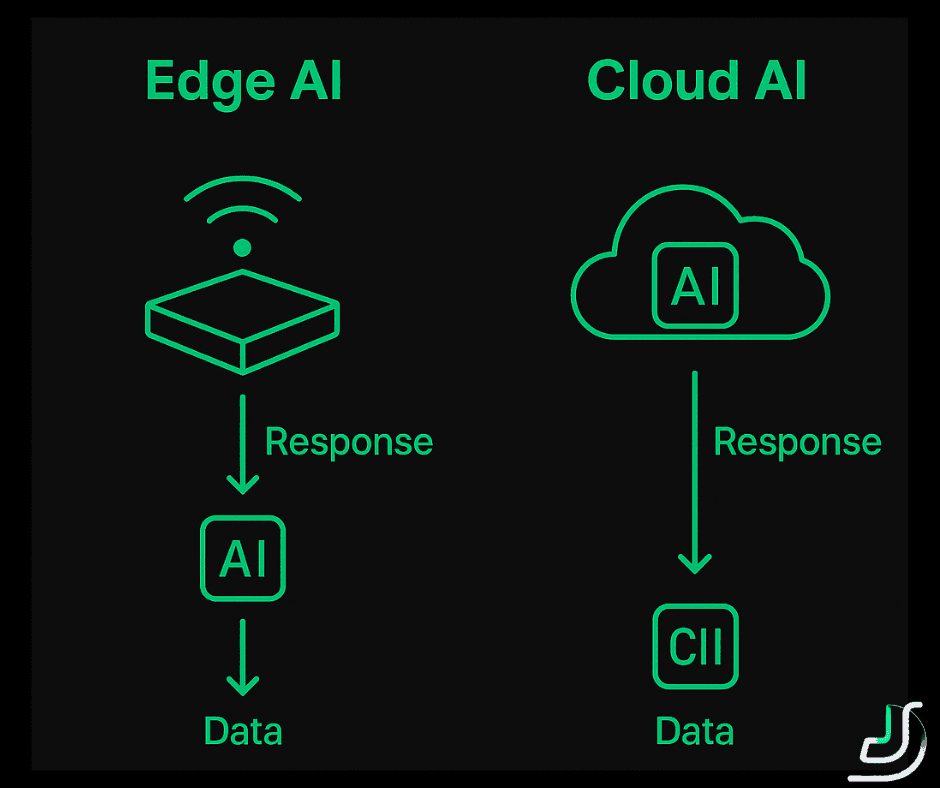
This article maps where computer vision is genuinely shipping at scale across seven industries, with reference deployments that anchor the abstractions. For deeper treatment of the architectural patterns, see our edge AI article — most production CV deployments are edge-first because latency and bandwidth constraints rule out pure cloud architectures.
What computer vision is, in production terms
Computer vision is the AI subfield that processes, analyzes, and interprets digital images and video — emulating human visual perception with the speed and consistency machines have. Modern CV systems handle five core tasks:
- Object classification — assigns objects to predefined classes (cat, car, person, defective product)
- Object localization — locates objects in images via bounding boxes
- Object detection — combines classification and localization for many objects in a single image
- Semantic segmentation — assigns every pixel to a class (road, building, vegetation, sky), creating object masks
- Instance segmentation — semantic segmentation + distinguishing individual instances of the same class (three separate cars, not one merged car-mask)
Deep learning architectures (CNNs, Vision Transformers, Detection Transformers like DETR) deliver superior results on all five tasks, with hybrid approaches combining classical CV preprocessing with neural network reasoning. The architectural choice depends on workload — embedded edge inference favors smaller efficient models (YOLO-Nano, MobileNet-SSD), high-accuracy centralized inference uses larger architectures (Faster R-CNN, Mask R-CNN, transformer-based models).
The drivers behind CV's production maturity:
- Visual data abundance — billions of images created daily through mobile devices and IoT cameras
- Affordable compute — GPU and specialized inference hardware (Jetson, Coral, Hailo) brings CV to deployment cost ranges that didn't exist 5 years ago
- Mature deep learning — 10+ years of CV-specific research has converged on architectures that work reliably in production
- Pre-trained model availability — open-source models (YOLO, SAM, CLIP, Grounding DINO) accelerate deployment significantly
Seven industries shipping computer vision today
1. Retail and ecommerce
Computer vision is reshaping how shoppers interact with stores and online platforms. Five primary deployment patterns:
Automated checkouts and cashierless stores. Amazon Just Walk Out, JD, Alibaba's automated stores combine CV with shelf sensors and deep learning to recognize shoppers, detect cart additions, and charge accounts at exit. Tiliter's self-scanning scale auto-identifies fresh produce without barcodes.
In-store navigation. CV + AR apps locate customers in aisles, route them to products, recalculate routes as they browse. Lowe's indoor mapping app (built with Google) handles this without requiring active Wi-Fi or GPS.
Visual search and product discovery. eBay-style visual search returns visually similar products from a catalog based on user-uploaded images. Significantly easier discovery for fashion, home goods, and visual-heavy categories than text search.
Virtual try-on and personalization. Sephora's makeup AR mirror, Amazon's clothing virtual try-on, Neutrogena Skin360's facial assessment app. CV interprets the user's appearance to generate personalized recommendations.
Inventory and shelf management. Shelfie's shelf-mounted cameras and Tally's mobile robots monitor stock levels, detect damaged packaging, identify pricing errors. Deployed across major retailers for 24/7 inventory visibility.
2. Education
CV deployments in education focus on engagement, assessment, and accessibility:
- Engagement tracking — analyzing student attention, expression, and engagement during online or in-person classes (with privacy considerations and consent disclosure)
- Automated assessment — grading handwritten exams, evaluating drawings, automating diagrams in STEM testing
- Accessibility — real-time sign language recognition for deaf students, document-to-speech with image extraction for visual impairment, content auto-tagging for searchable archives
- Plagiarism detection in visual content — image-based search across student submissions to identify copy-paste from external sources
- Smart classroom systems — automated attendance, room utilization analytics, security monitoring
3. Healthcare
CV in healthcare is among the most production-mature deployments anywhere — diagnostic radiology, pathology, dermatology systems routinely match or exceed specialist accuracy on benchmark tasks. Reference deployments include Medtronic's GI Genius endoscopy module (real-time colorectal lesion detection), AI-augmented mammography improving breast cancer detection by 20%, and dermatology apps with FDA-cleared classifiers.
The architectural pattern: edge inference on the medical device for real-time decisions, with cloud-based model retraining and centralized clinical analytics. SaMD pathway considerations are critical for any diagnostic deployment — see our healthcare AI cost article for treatment of the regulatory load.
For deeper treatment of healthcare AI deployments, see /industries/healthcare.
4. Fitness and sports
CV-driven applications in fitness span personal coaching, performance analytics, and broadcast augmentation:
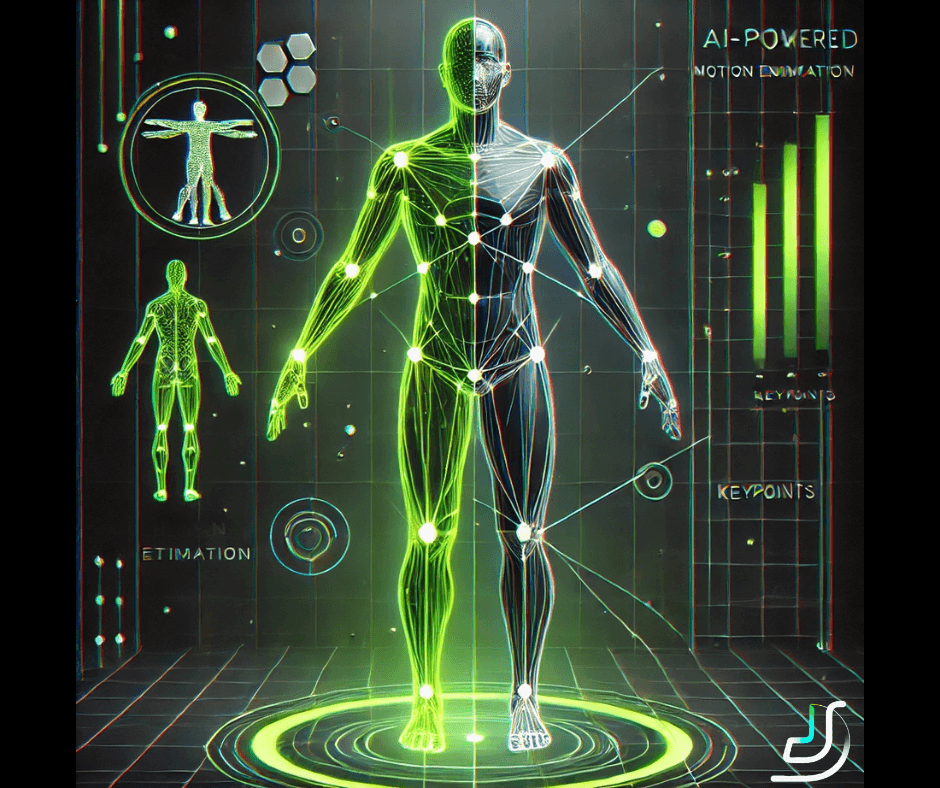
Personal coaching apps. CV analyzes user form during exercises, counts repetitions, identifies form errors. We built an AI fitness mirror on this pattern — see edge AI article for the architectural details.
Sports analytics. Real-time player tracking, ball trajectory analysis, formation recognition. Used across professional sports for coaching, broadcast graphics, and fan engagement. Hawk-Eye's tennis line-calling system is the canonical reference.
Broadcast augmentation. Real-time graphics overlay, replay generation, automated highlights. CV identifies key moments without manual editor intervention.
Pose estimation for rehabilitation. Physical therapists use CV-based tools to assess range of motion, track recovery, ensure proper form during home exercises.
5. Precision agriculture
CV deployment in agriculture is transforming both yields and resource efficiency:
- Crop health monitoring — drones and stationary cameras detect disease, nutrient deficiency, water stress before symptoms become visible to humans
- Weed identification and targeted spraying — ground robots use CV to identify weeds vs crops, applying herbicide only where needed (cuts pesticide usage by 80%+ in deployed systems)
- Yield prediction — CV-based fruit and vegetable counting on trees and vines, projecting harvest volume weeks in advance
- Livestock monitoring — behavioral analysis to identify illness early, automated counting for inventory management, individual animal recognition for health records
- Quality grading — automated sorting of produce by size, ripeness, defect status
These deployments combine edge inference (on tractors, drones, fixed cameras) with cloud-based aggregation for farm-level decision-making.
6. Manufacturing and mining
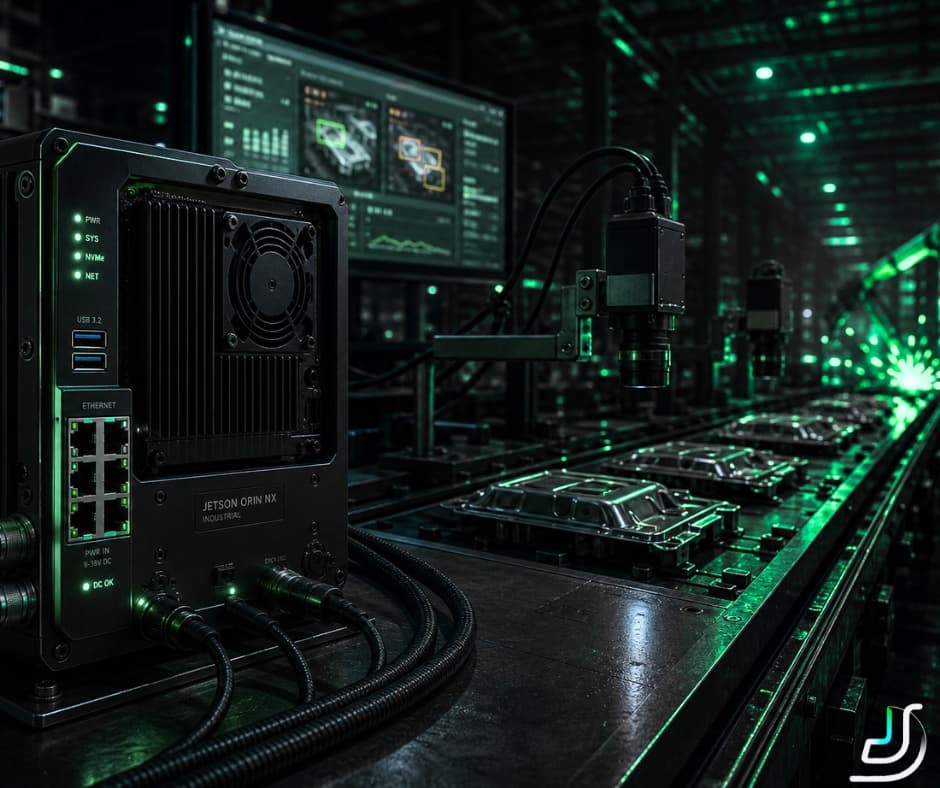
Manufacturing CV is mature, deployed at scale, and pays back in measurable production metrics:
- Quality control — defect detection on production lines at speeds and accuracy humans can't match. Found scratches, misalignments, missing components, color variation, dimensional errors.
- Predictive maintenance via visual inspection — thermal imaging, vibration visualization, surface anomaly detection on industrial equipment before failure
- Worker safety monitoring — PPE compliance verification, unsafe behavior detection, restricted area monitoring
- Process monitoring — real-time visualization of production parameters, automated batch tracking, traceability documentation
- Mining equipment monitoring — drone-based inspection of pit walls, equipment health, material classification at extraction points
Reference deployment at scale: BMW's edge AI factory floor monitoring across 43 global factories. Volkswagen reports double-digit millions in annual savings from the deployment. Fero Labs' edge ML systems contributed to 35% average CO₂ reduction across customer deployments.
For deeper treatment of edge AI architectures in manufacturing, see our edge AI article. For JustSoftLab manufacturing capabilities, see /industries/manufacturing.
7. Cross-industry applications
Several CV applications cut across multiple industries:
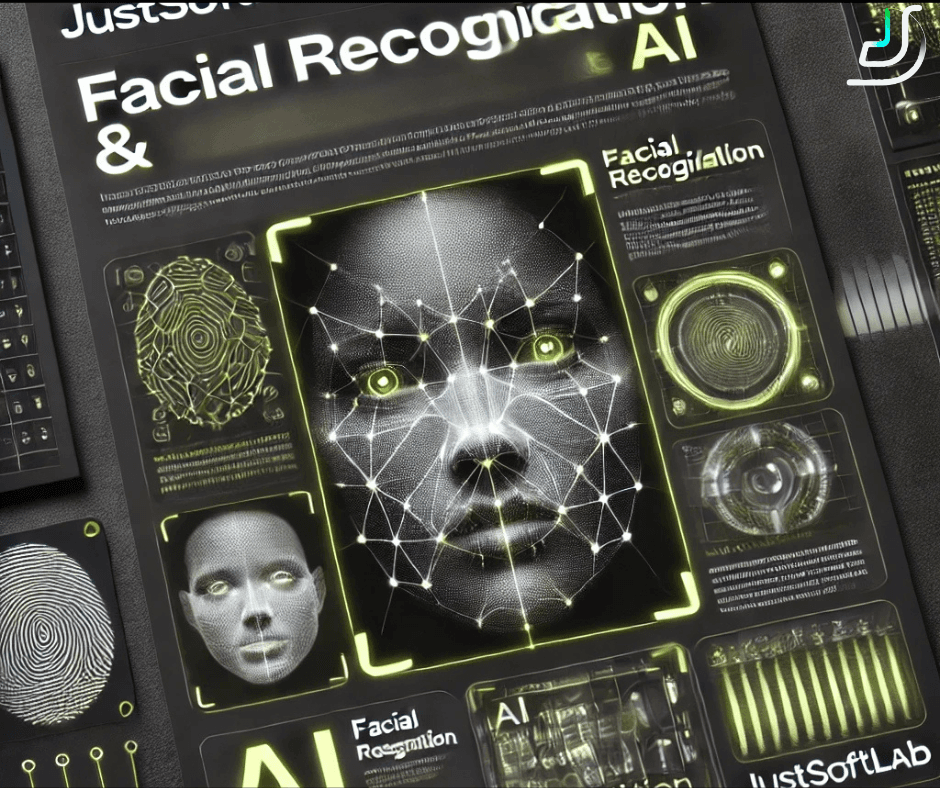
Security and surveillance. Facial recognition, anomaly detection, motion tracking, restricted-area monitoring. Deployed across retail, government, hospitality, healthcare. Architecture is typically edge-first — see our theft detection portfolio example for production patterns in retail security.
Document processing. OCR, form recognition, signature verification, table extraction. Foundation for digital transformation in finance, legal, healthcare, government. Modern systems combine traditional OCR with vision-language models for unstructured document understanding.
Identity verification. KYC for fintech, identity document validation, biometric authentication. Critical infrastructure for digital onboarding workflows. Compliance load includes GDPR for biometric data, jurisdiction-specific KYC regulations, fraud prevention requirements.
Construction and facilities monitoring. Drone-based progress tracking, safety compliance verification, asset inventory, BIM model validation against real-world construction.
Transportation and logistics. License plate recognition, parking management, fleet tracking, package handling automation, last-mile delivery robotics.
Architectural patterns we ship
Five engineering principles that consistently produce successful CV deployments:
Edge-first deployment when latency or bandwidth bind. Most production CV at scale runs at the edge — on smart cameras, embedded systems, mobile devices. Cloud-only architectures rarely scale economically beyond pilot. Plan the architecture around inference location from day one.
Pre-trained foundation models as the starting point. YOLO, SAM, CLIP, Grounding DINO, FastSAM — open-source models with strong baseline accuracy. Fine-tune for domain specifics. Building from scratch is rarely the right investment for production CV.
Synthetic data to close coverage gaps. Real-world image data is expensive to collect and label. Synthetic data generation via diffusion models, simulated environments, and procedural augmentation closes coverage gaps for rare classes, edge cases, and difficult lighting conditions. 50/50 real/synthetic blends consistently outperform real-only training in our engagements.
Continuous monitoring and retraining. CV models drift as cameras age, lighting conditions change, and new product variants get introduced. Production systems need automated drift detection, alerting on accuracy degradation, and scheduled retraining cycles. Budget 15–20% of initial development annually for these activities.
Privacy-first architecture for any face or behavior recognition. Biometric data carries serious regulatory load (GDPR, CCPA, BIPA in Illinois). On-device processing, irreversible faceprint hashing, explicit user consent, retention policies — all non-negotiable for production deployment in jurisdictions with strong privacy laws.
Looking forward
The next wave of CV is converging with two adjacent technologies:
Vision-language models (VLMs). Models like GPT-4V, Claude 3.x with vision, Gemini, LLaVA, Qwen-VL combine CV with language understanding. The ability to ask "what's wrong with this product?" or "describe the safety issues in this image" in natural language opens deployment patterns that pure CV models can't.
3D understanding. NeRF, Gaussian Splatting, and 3D reconstruction techniques are bringing spatial reasoning to CV systems. Applications in robotics, AR/VR, autonomous systems, construction, and digital twin generation.
These capabilities are still emerging in production. The deployments we'll see in 2026-2027 will combine traditional CV (for high-throughput, low-latency tasks) with VLMs (for ad-hoc analysis and natural-language interfaces) and 3D understanding (where spatial context matters).
What's deployable today vs what's still pilot
Production-ready:
- Object detection and classification on bounded tasks (manufacturing QC, retail inventory, security)
- Face recognition for authorized access (with privacy compliance)
- Document OCR and structured extraction
- Medical imaging classifiers for narrow conditions
- Retail analytics (footfall, dwell time, basket analysis)
- Industrial quality control and predictive maintenance
Pilot-stage:
- Open-domain visual reasoning (VLM applications)
- Multi-camera tracking across complex environments
- Real-time 3D scene understanding for robotics
- Autonomous safety-critical decisions in unconstrained environments
Wait:
- Fully autonomous medical diagnostics without specialist review
- General-purpose visual reasoning that matches human expert judgment
- CV-driven autonomous decisions in safety-critical regulated environments
The honest framing
Computer vision is mature, deployable, and shipping at scale. The companies that lead in their industries are deploying CV in disciplined ways — picking the right workloads, designing for edge inference where appropriate, building privacy-first architectures, and operating with the continuous monitoring and retraining discipline that production AI requires.
The competitive advantage comes from operational discipline, not from picking the most impressive demos. The architectures that work are documented. The models that perform are available open-source. What separates production CV deployments from pilots is the engineering work — integration, observability, drift detection, governance — that doesn't make for good headlines but determines whether the deployment delivers measurable value.
Ready to scope a computer vision project? Run the Project Estimator for a deterministic ballpark, or book a 45-minute Discovery with our computer vision engineers — we'll review your data, latency requirements, and integration surface and tell you honestly which CV application is ready for production deployment.
Talk to the team behind this
Building something like this in production?
Our senior engineers ship this kind of work for real teams. 45-minute call, no pitch deck — just architecture, trade-offs, and whether we're the right fit for your problem.