
AI cost reduction playbook: mechanisms, drivers, and real-world success stories
How AI actually reduces operational cost in production — the four mechanisms, the industries seeing the biggest impact, three JustSoftLab engagements with measurable results, and the playbook for replicating these outcomes.

AI cost reduction is real, measurable, and shipping at scale across multiple industries — but only when teams scope disciplined deployments against specific cost levers. Most "AI for cost reduction" projects fail not on technology but on framing: vague goals, unclear baselines, no measurable ROI path. This article maps the four mechanisms that actually drive AI-enabled cost reduction, the industries seeing the biggest impact, three JustSoftLab portfolio engagements with concrete results, and the disciplined playbook for replicating these outcomes.
For broader AI cost framing (development cost vs. operational cost reduction), see how much does AI cost in 2026.
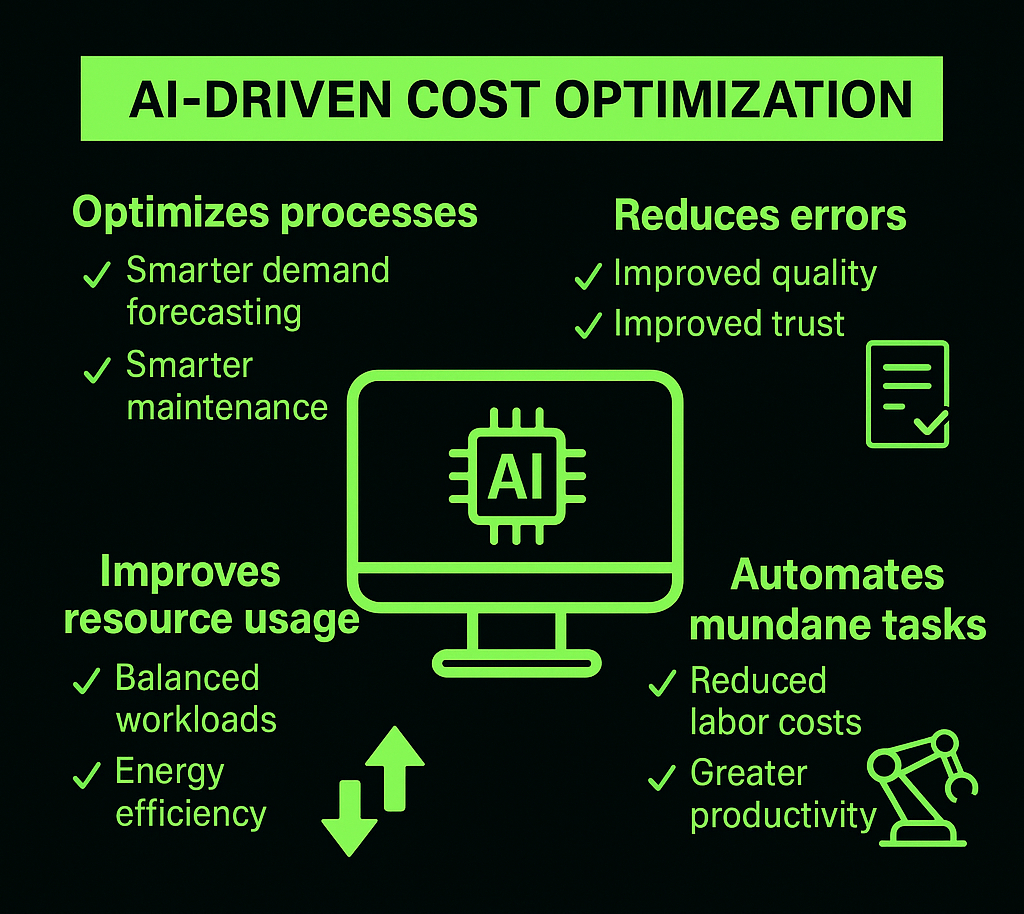
Four mechanisms behind AI-driven cost reduction
1. Automating mundane tasks (with cognitive uplift)
Traditional automation (RPA, IPA, BPA) moves data from A to B. AI extends this to interpreting documents, extracting meaning, and making context-aware decisions on unstructured inputs.
Reference deployment: JPMorgan's COIN platform reviews complex legal contracts in seconds — work that used to consume 360,000 hours of lawyer time per year. Direct labor cost reduction plus dramatic accuracy improvement on contract analysis.
The pattern: AI handles tasks that classical automation can't (because the inputs are unstructured) but humans shouldn't (because the volume is high and the work is repetitive).
2. Reducing errors and improving quality
Mistakes cost money — defective products, regulatory penalties, financial misstatements, missed diagnoses. AI catches anomalies humans miss at scale.
- Anomaly detection in finance: flagging suspicious transactions before they snowball into fraud
- Medical imaging: detecting subtle tumors that radiologists missed (see our AI radiology article)
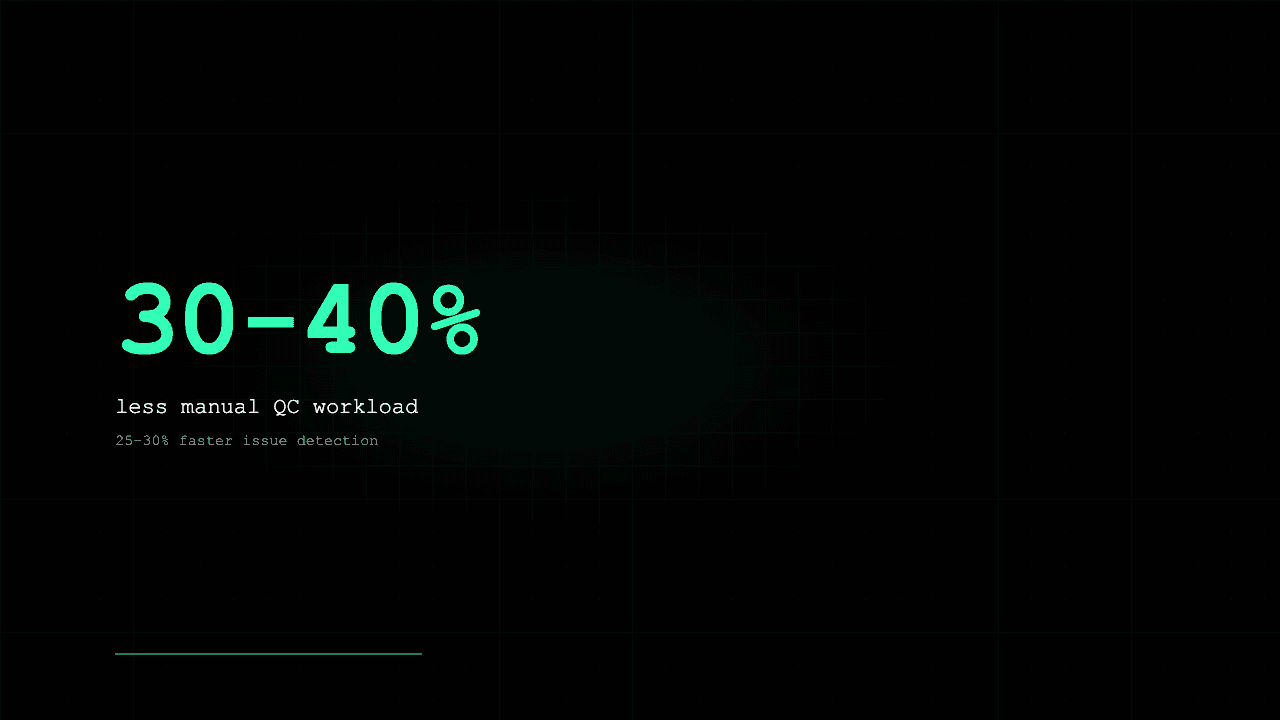
- Manufacturing inspection: catching millimeter-level defects before products leave the line
Real cost impact: lower defect rates, fewer recalls, reduced rework, lower fraud losses, fewer regulatory penalties.
3. Optimizing processes and operations
AI mines historical and real-time data to suggest better ways to run operations:
- Supply chain demand forecasting: 46% of companies reported 10% cost reduction after AI deployment in logistics
- Predictive maintenance: up to 50% reduction in unplanned downtime and 25% maintenance cost reduction
- Energy optimization: dynamic load balancing, peak shaving, route optimization
The pattern: AI exposes inefficiency patterns invisible at human scale, enabling continuous optimization that compounds over time.
4. Improving resource and energy usage
AI makes existing infrastructure work harder:
Reference deployment: Microsoft's data center optimization. AI dynamically balances workloads, pushing server utilization from typical 50–60% to 80–90%. AI-driven "power harvesting" reallocates unused electricity across sites — savings equivalent to 800 megawatts of recovered energy since 2019.
Same pattern applies to fleet utilization, warehouse capacity, manufacturing line throughput, professional services capacity, and any other constrained resource.
Beyond cost: strategic benefits AI delivers
The hidden value beyond direct expense reduction:
Workflow rebalancing. AI handles routine work; humans focus on high-value activities. Omega Healthcare saved 15,000 employee hours per month using AI Document Understanding — 40% reduction in documentation time, 50% reduction in turnaround, 99.5% accuracy maintained, 30% ROI for clients.
Better decisions, faster. McKinsey's 2025 Superagency report found organizations using AI agents see 66% higher productivity, 57% cost savings, 55% faster decisions. AI agents are increasingly teammates, not just tools.
Quality moat that compounds. Ford's AI camera systems (AiTriz, MAIVS) detect vehicle defects in real time — preventing recalls that cost millions. Amazon, Siemens, Foxconn deploy similar systems. The cost savings compound; the quality reputation strengthens.
Revenue uplift, not just cost reduction. WEF research shows GenAI implementation drives 10–20% revenue lift alongside 5–10% cost reduction — fueling 15–30% EBITDA improvements. McKinsey projects AI could boost corporate annual revenues by $2.6–$4.4T globally.
Industries with the highest cost reduction leverage
Five sectors where AI cost reduction is most measurable today:
Healthcare and life sciences
Administrative automation alone could save the US healthcare system ~$150B annually. AI agents transcribing notes and filling EHRs reduce clinician burden directly. AI decision support reduces costly misdiagnoses and unnecessary treatments by up to 50%.
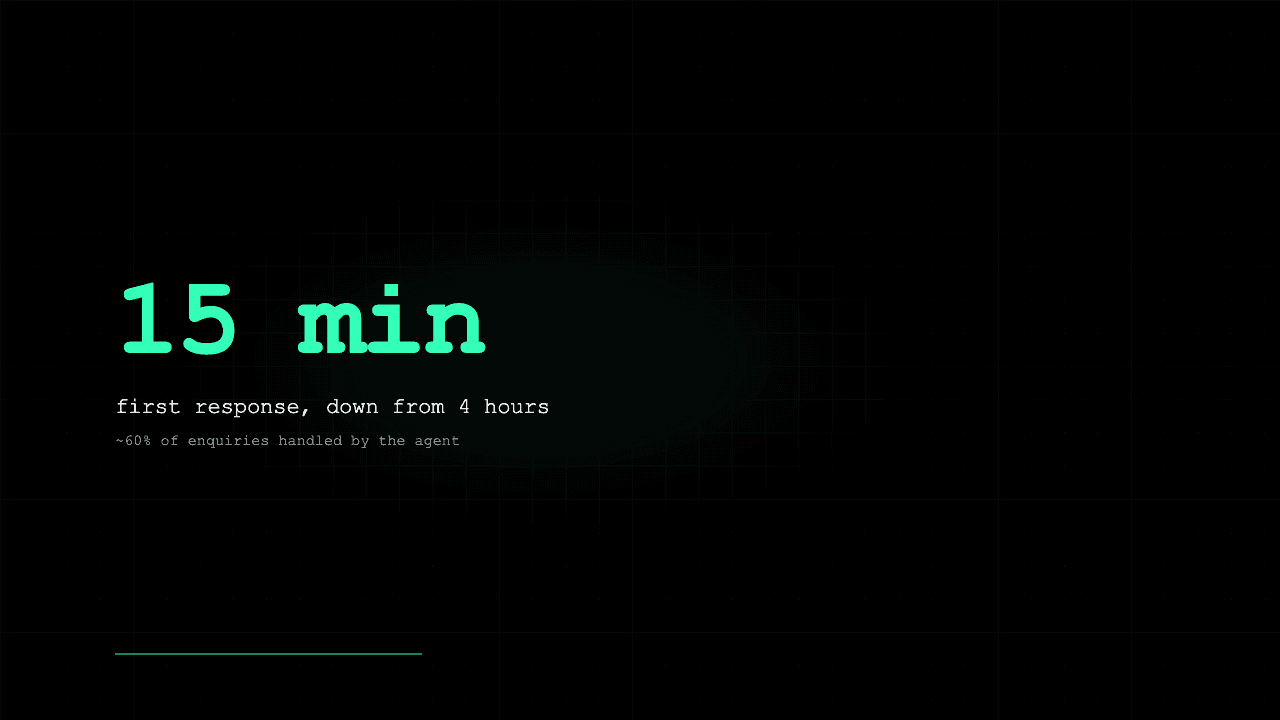
A global biopharma used GenAI to cut agency costs 20–30% (saving $80–170M in marketing spend) and accelerate clinical trial reporting ~35% (saving $45M+ in R&D). Pfizer's AI-optimized vaccine cold supply chain prevented millions in spoilage. Insurance: NIB health's Nibby chatbot handled 60% of customer queries, saving $22M.
Energy and utilities
US power generation company deployed 400+ AI models to monitor turbines and boilers — saving ~$60M/year through reduced forced outages. Octopus Energy's Kraken platform uses ML to schedule peak energy use during cheap hours. German energy provider's GenAI invoice-checking tool identified supplier overcharges in a 10-week pilot, recovering tens of millions.
Retail and ecommerce
General Mills used AI to optimize supply chain logistics — analyzing 5,000+ daily shipments — saving $20M+ since 2024. Ralph Lauren's AI demand forecasting drove 25% of international DTC operations, contributing to 24% operating profit increase. Amazon's dynamic pricing updates products multiple times daily based on demand and competition. DSW's AI virtual agent saved $1.5M annually in support costs.
Logistics and transportation
UPS's ORION system analyzes routes and traffic — eliminating 100M drive-miles per year, saving 10M gallons of fuel, $300–400M operating cost savings annually. Dynamic ORION upgrade saves 2–4 additional miles per driver per day. Predictive maintenance in logistics fleets reduces breakdowns and extends vehicle life. Amazon's AI-guided warehouse robots process 20% more orders per hour, reducing fulfillment costs up to 40%.
Manufacturing
Auto plant downtime costs $2.3M per hour. BMW's Regensburg plant AI-supported assembly system saves ~500 minutes of disruption annually. Ford's AiTriz and MAIVS systems detect millimeter-level assembly defects in real time across North American plants — preventing recalls and rework, fixing issues while vehicles are still on the line.
The pattern: industries with high operational complexity and spend (healthcare, energy, manufacturing) capture the largest absolute savings. Even small percentage improvements translate to massive dollar impact.
Three JustSoftLab portfolio engagements
1. AI rooftop analysis and lead scoring for US solar provider
Situation. A US residential solar manufacturer-installer needed to expand into new states without high door-to-door canvassing costs and manual roof checks.
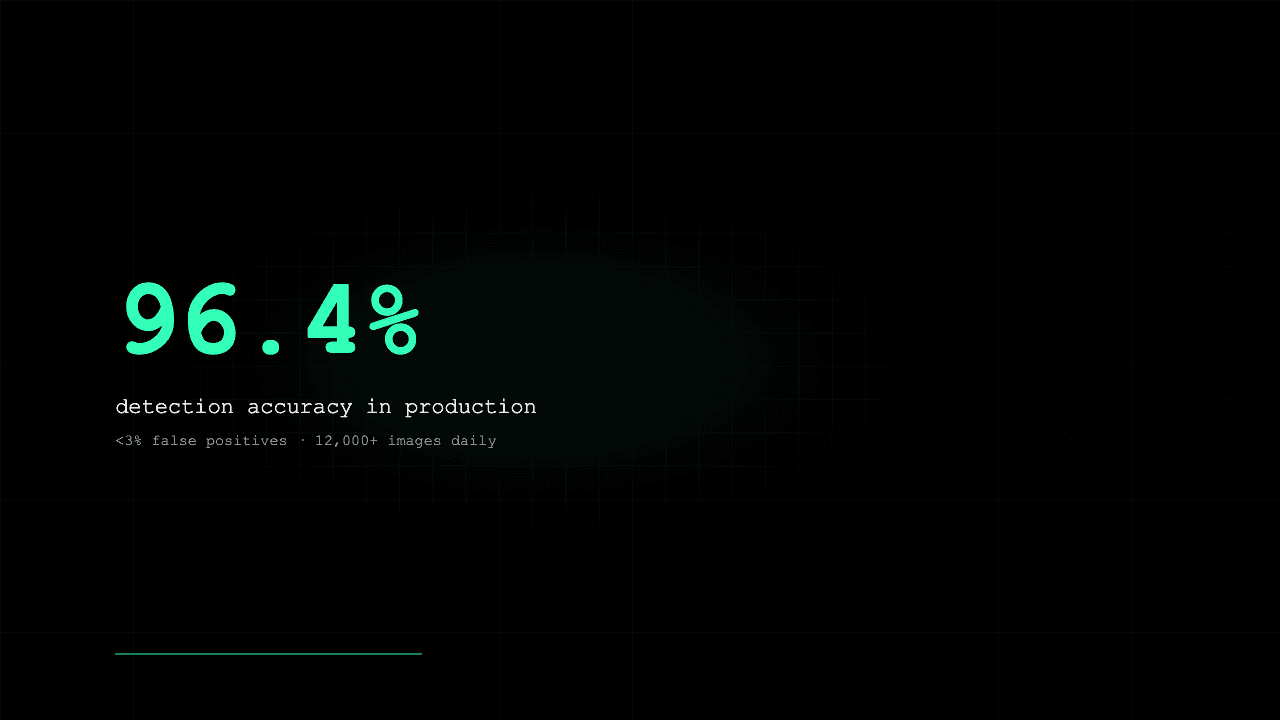
Solution. We built a location intelligence platform using computer vision to score addresses based on roof shape, pitch, orientation, shading, and open property data. Automatic territory mapping, high-potential home assignment, employee hiring/onboarding tools, and pitch recording analysis for coaching insights.
Results:
- 80% reduction in lead qualification time
- Market entry decisions made remotely before committing field spend
- Lower recruiting/onboarding overhead via unified workflow
- Higher rep effectiveness through real-time dashboards
- Scalable growth without proportional headcount or travel costs
2. GenAI sales training platform with RAG architecture
Situation. US SaaS company needed to slash sales rep onboarding cost (typically 3–6 months and $100K+ per hire) without sacrificing accuracy or personalization.
Solution. We delivered a flexible LLM system with RAG-based architecture. Custom tooling for PDFs, PPTX, DOCX, subtitles. Embeddings with intelligent content chunking. Personalized training via CV/role alignment. Real-time Q&A assistant. Manager dashboards. Direct high-performance LLM endpoint to minimize latency.
Results:
- Up to 92% reduction in onboarding time (~6 months → ~2 weeks)
- Full role-tailored curricula generated in 4–5 hours instead of months
- Lower hallucinations through layered grounding and QA
- Senior managers reallocated from content creation to coaching
- Scalable SaaS foundation supporting new teams and content with minimal lift
3. AI patent drawing automation
Situation. Patent law firm struggled with slow, error-prone manual conversion of CAD models into USPTO/EPO/WIPO-compliant black-and-white drawings — triggering costly revision cycles and filing delays.
Solution. Web platform with drag-and-drop CAD upload. U-Net deep learning model trained on approved patent drawings — renders compliant 2D views from 3D geometry, applies margins, line weights, numbering, view requirements automatically. Generates top/side/sectional/exploded views. Selective reprocessing on CAD changes. Print-ready PDF export. Stripe integration.
Results:
- 85% faster turnaround (40+ hours → under 6 hours)
- 95% first-time compliance with USPTO/EPO/WIPO standards
- 60% lower operational costs by eliminating most routine illustrator work
- Consistent reviewer-grade output at scale
- Filing timelines reduced from weeks to days
Five practical steps to capture AI cost reduction
The disciplined playbook from real engagements:
1. Frame the cost problem in financial terms
Before any technology decision, define the cost problem with specific financial targets and a clean baseline. "Reduce invoice processing costs per document by 40% by Q3" beats "automate invoicing." Assign a cost owner. Involve finance early to ensure impact is audited, not inferred.
2. Target high-volume, high-variance processes
The highest-leverage starting points: finance operations, customer support deflection, demand forecasting, quality inspection, predictive maintenance, inventory optimization, cloud spend control. Apply value × feasibility × data-readiness scoring to surface one needle-moving use case plus one quick win to build momentum.
3. Establish baseline metrics before deployment
You can't measure improvement without a baseline. Document current cost, throughput, error rates, cycle times. The work to establish the baseline is part of the investment — not optional. Most "AI cost reduction" projects fail in measurement, not technology.
4. Pilot before scaling
A 6–12 week PoC at $40K–$80K validates the cost reduction hypothesis on real data before committing to full deployment. The pilot either hits the success metrics or it doesn't. If it does — scale. If it doesn't — diagnose root cause and either fix or shut down. Don't scale projects that haven't validated cost impact.
5. Plan for compound benefits, not just direct cost cuts
The largest AI cost reduction wins come from compound benefits: better decisions, fewer errors, faster cycle times, employee morale and retention, customer satisfaction. Direct labor cost reduction is the most visible win but rarely the largest. Plan and measure for the full benefit stack.
From cost reduction to cost transformation
The most ambitious AI deployments don't just reduce costs — they transform cost structures. The pattern:
- Variable to fixed. Per-token API pricing scales linearly with usage; self-hosted infrastructure scales sublinearly. At scale, the economics flip dramatically.
- Reactive to predictive. Predictive maintenance shifts cost from emergency repairs to scheduled work. Demand forecasting shifts inventory cost from reactive stockpiling to optimized levels.
- Manual to automated. Variable, hard-to-scale labor cost converts to scalable software cost.
- Single-use to multi-use. AI capabilities built for one use case generalize to others, amortizing development cost across multiple value streams.
The companies achieving cost transformation through AI aren't deploying narrow point solutions — they're building AI capabilities into core operating models. This is multi-year, multi-million-dollar investment, but the cumulative impact compounds over years in ways narrow point solutions don't.
AI cost reduction FAQs
What's the realistic timeline to see AI cost reduction results? PoC validation: 6–12 weeks. Initial production deployment with measurable cost impact: 4–8 months. Full ROI realization: 12–18 months for narrow deployments, 2–3 years for transformative initiatives.
Where do AI cost reduction projects most often fail? Three places. Vague success metrics — "reduce costs" instead of "reduce cost per X by Y%." No clean baseline — can't measure improvement without it. Premature scaling — expanding before validating cost impact in pilot.
What's the cheapest viable starting point? PoC at $40K–$80K targeting one specific cost lever with measurable baseline. Validates the hypothesis, surfaces integration risks, lets you scope full deployment on real data.
How do I avoid the cost spiral seen at AI Dungeon and similar deployments? Three patterns. Route by query type — simple to small/fast models, complex to frontier. Cache deterministically answerable queries. Monitor unit economics monthly. If cost per query is climbing while quality stays flat, the architecture has drift.
Should we build internal AI capability or partner externally? Both, sequenced. External delivery teams accelerate the build phase and bring senior expertise that's hard to hire. Internal team grows during steady-state operation through knowledge transfer. The right balance depends on whether AI will be a strategic core capability requiring full ownership.
Ready to identify AI cost reduction opportunities in your operations? Run the Project Estimator for a deterministic ballpark, or book a 45-minute Discovery with our AI engineers — we'll review your highest-cost workflows, validate cost reduction hypotheses, and tell you honestly which deployments are ready to ship and which need more scoping work.
Talk to the team behind this
Building something like this in production?
Our senior engineers ship this kind of work for real teams. 45-minute call, no pitch deck — just architecture, trade-offs, and whether we're the right fit for your problem.