
What are AI agents, and how do you implement them?
AI agents aren't a passing fad and aren't a magic CEO replacement — they're production engineering with specific architecture and specific failure modes. What they are, when to use them, and the honest accuracy timeline.

The AI agent market is real — $4.8B in 2023, projected to reach $28.5B by 2028 at 43% CAGR. But the gap between "AI agent" as a marketing term and "AI agent" as production-deployable engineering is enormous. Most teams reading the headlines about AI agents end up either over-investing in autonomous systems that aren't ready, or dismissing the technology entirely. Both responses miss what's actually shipping.
This article maps what AI agents actually are in production engineering terms, the six architectural patterns, where they ship today, where they don't, and the honest timeline to get from working prototype to predictable production system. For agent-specific cost framing, see how much does AI agent development cost. For the production reference architecture in regulated environments, see /fintech/rag.
What an AI agent actually is
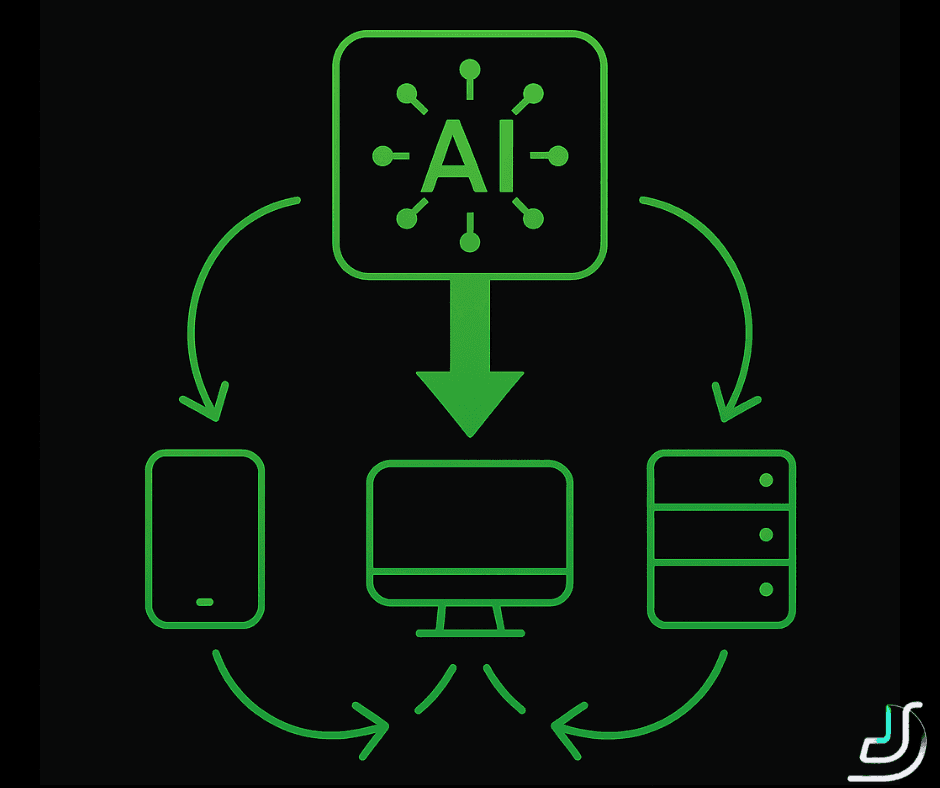
An AI agent is software that interacts with its environment, perceives data, makes decisions, takes autonomous actions, and adapts behavior over time. Agents can be physical (smart thermostats, autonomous vehicles, robots) or software-based (virtual assistants, ERP-embedded automation, autonomous workflow systems).
The popularization of LLMs (Claude, GPT, Gemini) made agents more accessible — language models read and respond to natural-language instructions, lowering the bar for building agent interfaces. But not every AI agent uses GenAI. Classical AI, rule-based logic, classical ML, and reinforcement learning are all valid agent foundations. The right architecture depends on the workload.
What separates AI agents from chatbots, RPA, or automation scripts: agents make rational decisions based on environmental context, not pre-scripted responses. Different inputs to the same situation produce different outputs. Users don't continuously prompt; the agent operates toward a goal autonomously, escalating only when it can't proceed. Chatbots respond when prompted; agents act on their own initiative within their defined scope.
Four characteristics that define an AI agent
- Autonomy. Decisions and actions independent of human prompting at each step.
- Reactive and proactive behavior. Agents respond to environmental stimuli (reactive) and take initiative toward goals (proactive). They function in static environments with fixed rules or dynamic environments where they must continuously learn.
- Learning and adaptation. Performance improvement over time via machine learning, reinforcement learning, or rule-base updates.
- Goal-oriented behavior. Programmed to achieve specific objectives, with decision logic for prioritizing tasks and adjusting course.
Six architectural patterns
The taxonomy that matters in production engineering. Each pattern has distinct cost, complexity, and reliability characteristics.
1. Simple-reflex agents
React to stimuli based on predefined rules. No state, no environmental model, no learning. Effective in static environments with known inputs.
Example: basic smart thermostat without self-learning. Temperature sensor input → if-then rule → heater on/off. Cheap, reliable, bounded.
2. Model-based reflex agents
Maintain an internal model of the environment to infer information not explicitly observed. Update the model as the environment changes.
Example: intelligent vacuum cleaner. Sensors detect obstacles, dirt, floor types. Internal map informs cleaning strategy (suction power per surface, navigation around furniture).
3. Goal-based agents
Possess reasoning capability — investigate multiple paths to a goal, pick the most efficient. Generate sub-goal lists. Take action only when it advances toward the final goal.
Example: AI chess engine. Comprehensive board model, chess rules, primary goal of checkmate while minimizing risk. Anticipates opponent moves, evaluates strategy outcomes.
4. Utility-based agents
Evaluate paths against a utility function (preference). Choose the path that maximizes utility, not just the one that reaches the goal.
Example: trip-planning agent with preferences. "Get there as cheap as possible" vs "get there as fast as possible" produces different routes from the same start point.
5. Learning agents
Begin with limited knowledge, expand through experience. Adapt automatically to dynamic environments without manual rule reprogramming.
Example: personalized recommendation engine. Initially recommends based on general popularity. Refines suggestions as it observes user behavior, ratings, and browsing patterns.
6. Hierarchical agents
Organized in layers — high-level agents decompose tasks into subtasks, distribute to lower-level agents, aggregate results.
Example: self-driving vehicle. High-level planning agent (route selection considering traffic and rules) delegates to mid-level agents (highway driving, city navigation, parking) which instruct low-level control agents (steering, braking, acceleration).
The architectural choice depends on the workload — environment complexity, accuracy targets, learning requirements, latency constraints. Most production agents combine patterns rather than fitting cleanly into one category.
How AI agents work in production
Every production AI agent has six components:
- Environment — the domain (physical or digital) where the agent operates
- Sensors — interfaces that collect data (text input, audio, video, sensor readings, API responses)
- Actuators — interfaces that convert agent output into action (UI updates, API calls, robotic movements, file writes, communication actions)
- Decision-making mechanism — the reasoning core (rule-based, neural network, LLM with prompt orchestration, hybrid)
- Learning system — the component that updates behavior over time (supervised, unsupervised, reinforcement learning, prompt or RAG iteration)
- Knowledge base — the rules, facts, retrieval corpus the agent draws from for decisions
The five-step workflow we ship on production agents:
- Goal initialization — receive request from user or upstream system
- Subtask decomposition — generate prioritized list of subtasks needed to reach the goal
- Decision making — for each subtask, gather data from sensors, query knowledge base, run reasoning
- Action execution — perform actions through actuators based on decisions
- Learning and adaptation — update behavior based on outcomes
The architectural sophistication scales with the workload. A simple customer-support agent may be a goal-based agent with a small action set and an LLM as the reasoning engine. An enterprise autonomous agent doing complex business workflows may be hierarchical with multiple layered reasoning agents, vector retrieval, integration adapters across many enterprise systems, and rigorous human-in-the-loop checkpoints.
Where AI agents ship in production today
Accenture research reports 96% of executives confident in AI agent ecosystems for the next three years. The reality is more uneven — agents ship in some domains, stall in others. Five domains where production deployments work today.
Healthcare
Agents analyze symptoms and medical history, suggest diagnostic pathways, route to specialists, optimize hospital workflows. Tars Healthcare Advisor AI interacts with patients, assesses symptoms, sends educational materials and reminders, helps navigate health conditions.
Patient admission prediction agents adjust resource allocation in real time — predicting evening admission volumes and rebalancing physician schedules accordingly. The pattern: agents augment clinician judgment with data integration, never replace clinical decision-making in regulated workflows.
Customer service
24/7 personalized customer support — answering questions, processing refunds, troubleshooting, escalating when needed. Beam offers pre-trained customer service agents (GDPR compliant, deployable in seconds) with customization options. The architectural pattern: domain-specific RAG over support documentation, with strict guardrails on transactional execution and escalation paths to human operators.
Manufacturing
Predictive maintenance, quality assurance, factory floor monitoring. Agents continuously monitor equipment sensor data and performance metrics for early-stage deterioration. Visual inspection for product defects at microscopic resolution. MotionMind AI for industrial safety uses computer vision to monitor manufacturing facilities and report safety hazards.
The differentiator vs classical AI: agents have actuators. They can adjust device parameters, activate alarms, stop conveyor belts — not just detect anomalies but respond to them within bounded scope.
Finance
Financial advisor agents analyze market trends, customer preferences, suggest portfolio assets, autonomously manage portfolios within defined risk parameters. Fraud detection agents study cybercrime patterns, monitor transactions in real time, flag and (where appropriate) terminate suspicious activity automatically. Security vulnerability scanning agents identify and triage software issues before exploitation.
For deeper treatment, see our GenAI in finance and GenAI in banking articles. Note: customer-facing financial agents in regulated workflows still require human oversight by regulation.
Transportation and logistics
Autonomous vehicles, route optimization, fleet management. Waymo operates fully autonomous ride-hailing services in Phoenix and San Francisco — vehicles trained on 20B+ miles of simulation, 20M+ miles of real driving experience. Safety claims: Waymo cars minimize accidents and injuries in operating areas.
Logistics agents analyze road conditions, weather, vehicle performance, delivery schedules for optimal route planning. Real-time traffic data integration drives autonomous redirection and schedule adjustment.
The honest accuracy timeline
Our CTO Illia Sivach frames the realistic timeline in production AI agent deployments:
"It takes a few weeks to build a workable prototype of a GPT-based teaching assistant agent that produces results with 60% accuracy. It takes at least ten months to take that accuracy to 90%. And don't expect smooth gradual improvement — AI models have black-box architecture. You can raise accuracy to 70%, and the next day it drops to 50%, and you're left guessing why."
The implication for scoping: AI agents in their current state are best suited for applications where slight output variations are acceptable. Where they aren't — high-stakes regulated workflows, customer-facing decisions with legal implications, autonomous financial actions — implement explicit human verification mechanisms or stay with simpler architectures (classical ML, rule-based, RPA) until the workload genuinely justifies the agent complexity.
The 90%+ accuracy target requires evaluation harnesses (golden sets, hallucination metrics, citation accuracy), rigorous prompt and retrieval iteration, and continuous monitoring with retraining cycles. Budget calendar months, not sprints.
Limitations to know before scoping
Five constraints that block production AI agent deployment more often than technical capability:
Accuracy and predictability. Black-box reasoning + LLM hallucination = potential for confident-incorrect outputs. One financial institution's response: implementing fact-checking layers between agent output and customer delivery — verified text reaches the customer, unverified output triggers human escalation. The architectural lesson generalizes: when the cost of confident-wrong is high, ship verification before delivery.
Scalability. McKinsey research found industry leaders report promising AI agent results in controlled environments but struggle to scale. Causes: accuracy issues compound at scale, organizational rewiring required, data quality and governance work, compliance and bias auditing — all the engineering effort that doesn't make for impressive demos but determines whether the agent ships.
Initial investment. Real production agents cost real money. See our agent development cost article for honest cost ranges by agent type and complexity. The MVP-to-production gap is where most agent projects burn budget without shipping.
Integration. Connecting agents to existing business systems (ERP, CRM, HR systems, data warehouses, communication platforms) requires custom adapters, authentication handling, idempotency logic, and observability. Integration alone often consumes 15–25% of total project budget.
Ethical and legal concerns. Liability for agent-caused harm in regulated sectors (healthcare, finance, government) is still emerging legally. Bias propagation across protected classes. Decision auditability for adverse-action notices. Plan for governance from day one, not as an afterthought.
What's deployable today vs what's still pilot
For executives weighing AI agent investment:
Production-ready:
- Customer service automation with strict transactional guardrails
- Internal copilots for high-skill professionals (advisors, analysts, tax consultants)
- Predictive maintenance and quality assurance in manufacturing
- Document processing and contract drafting (with human review)
- Knowledge-grounded Q&A on stable corpora
- Logistics and route optimization
Pilot-stage:
- Customer-facing financial advice without advisor oversight
- Autonomous credit decisioning
- Multi-agent coordinated workflows with shared state
- Long-running planning agents (weeks-to-months task horizons)
- Agentic workflows touching sensitive PII or PHI without HITL gates
Wait:
- Fully autonomous decision-making in safety-critical systems beyond demonstrated commercial deployments (autonomous medical decisions, autonomous financial trades at scale)
- Agents that learn from production traffic in regulated environments without retrained-model approval cycles
- Agents executing actions with legal or regulatory consequence without human accountability
How JustSoftLab approaches AI agent projects
Practical scoping that consistently produces shipping projects:
1. Start with a 4–8 week PoC at $20K–$60K to validate the workload on real data. Diagnose whether the workload genuinely needs an agent vs. simpler automation. Surface integration risks and data quality gaps.
2. Build the eval set first. 500–2000 representative input/output examples that define what success looks like. Hallucination rate, citation accuracy, refusal rate, latency p99, cost per interaction become deployment gates, not afterthoughts.
3. Pick the right agent architecture for the workload. Simple-reflex if the rules are stable. Goal-based with LLM reasoning if the workload requires planning. Hierarchical if the system has clear layered responsibilities. The wrong architecture forces overengineering or underengineering throughout the project.
4. Ship incrementally with HITL checkpoints. Production-grade agents in 90%+ accuracy territory need 8–12 months of build + iteration. Ship the first version at 60–70% with explicit HITL escalation, then iterate toward higher accuracy with the system actually serving traffic.
5. Plan governance from day one. Eval harness, drift detection, audit logging, refusal templates, incident response. The operational discipline to run AI agents in production is what separates the projects that ship from the ones that get demoed.
For deeper architectural patterns specifically in regulated workloads, see our reference architecture for fintech RAG. For end-to-end cost framing, see calculating the cost of generative AI.
Final framing
AI agents are real. They're shipping in production today across customer service, manufacturing, healthcare, finance, and logistics. They're also genuinely difficult to build well — accuracy timelines run months not weeks, integration absorbs significant budget, and operational discipline matters more than impressive demos.
The teams succeeding aren't picking between "deploy AI agents everywhere" and "AI agents are hype." They're scoping disciplined: which workflows genuinely benefit from autonomous reasoning, which architectures fit the workload, what accuracy is actually required, and how to govern the system in production. That scoping work is the difference between an AI agent project that compounds value over years and one that quietly dies after pilot.
Ready to scope an AI agent project? Run the Project Estimator for a deterministic ballpark, or book a 45-minute Discovery with our AI engineers — we'll review your workload, validate whether an agent is the right architecture, and tell you honestly what timeline and budget the build actually requires.
Talk to the team behind this
Building something like this in production?
Our senior engineers ship this kind of work for real teams. 45-minute call, no pitch deck — just architecture, trade-offs, and whether we're the right fit for your problem.