
ML-driven predictive maintenance: production patterns and ROI
Where ML-driven predictive maintenance is genuinely shipping today — five production patterns, the architectural approaches that work, and the ROI math that determines investment.
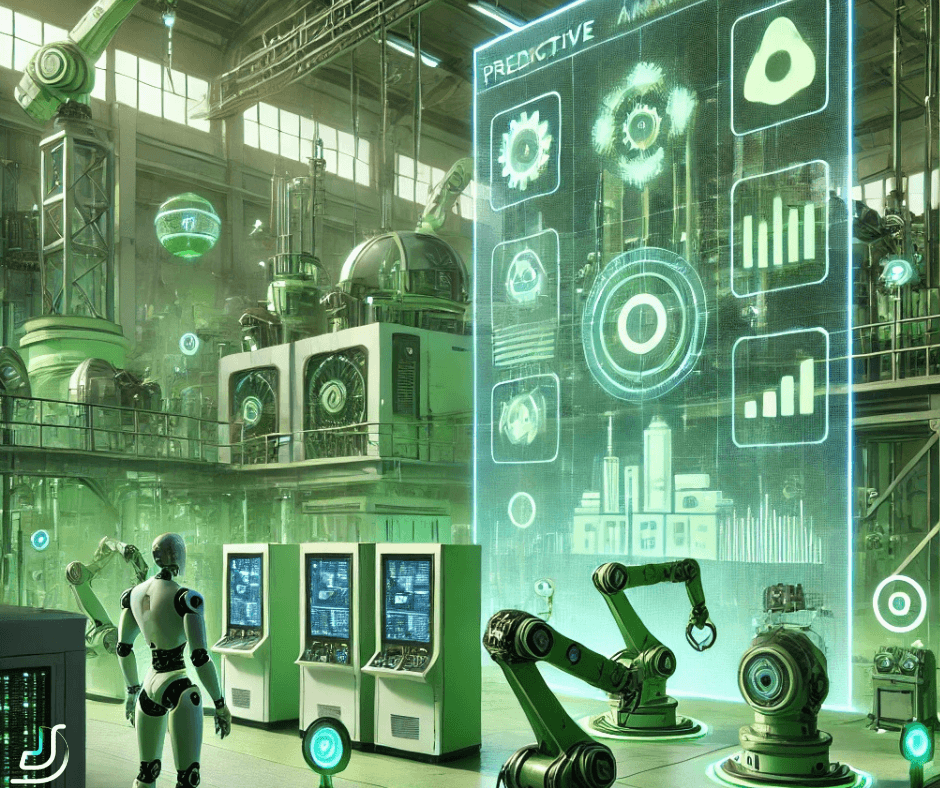
Predictive maintenance is one of the highest-ROI ML applications in industry. Up to 50% reduction in unplanned downtime and 25% maintenance cost reduction are documented across deployed organizations. BMW's Regensburg plant saves 500 minutes of disruption annually using AI-supported assembly maintenance. The opportunity is real; the question is which deployments fit your organization's operational maturity.
This article maps where ML predictive maintenance is genuinely shipping today — five production patterns, the architectural approaches that work, and the ROI math that determines investment. For broader manufacturing AI framing, see /industries/manufacturing. For broader AI cost framing, see calculating ML costs.
What predictive maintenance actually does
Traditional maintenance follows fixed schedules (every 1000 hours, every 6 months) regardless of actual equipment condition. Reactive maintenance addresses failures after they occur. Predictive maintenance uses ML to forecast equipment degradation and trigger maintenance just before failure — minimizing both unplanned downtime and unnecessary scheduled maintenance.
The pattern that works:
- Sensor data continuously monitored (vibration, temperature, current draw, pressure, acoustic signatures)
- ML models detect deterioration patterns invisible to threshold-based monitoring
- Alerts to maintenance teams with recommended action and timing
- Integration with maintenance management systems for work order creation
Five production patterns
1. Rotating equipment monitoring
Pumps, motors, compressors, turbines — equipment with predictable failure patterns from vibration and acoustic signatures.
Production patterns: vibration sensors + acoustic monitoring + ML models trained on equipment-specific failure patterns + integration with CMMS (computerized maintenance management systems).
Reference deployments: US power generation company deployed 400+ AI models for turbine and boiler monitoring, saving ~$60M/year through reduced forced outages.
2. Manufacturing line maintenance
Assembly lines, conveyors, robotic systems — production-critical equipment where downtime cost is high.
Production patterns: edge AI on equipment + cloud-based model training + real-time alerting + integration with production control systems.
Reference deployments: BMW's Regensburg plant AI maintenance, Volkswagen Group AI factory floor monitoring, Fero Labs' edge ML for industrial process optimization (35% CO₂ reduction across customer deployments).
Impact: dramatic reduction in unplanned line stops. Auto plant downtime costs $2.3M per hour — predictive maintenance ROI is rapid.
3. Asset health monitoring (oil & gas, mining)
High-value assets in remote locations where on-site inspection is expensive — drilling equipment, pipelines, mining equipment.
Production patterns: IoT sensors + satellite/cellular connectivity + cloud-based ML + alerting to remote operations centers.
Impact: dramatic reduction in equipment failure-driven shutdowns, better resource allocation for maintenance teams, lower insurance costs.
4. Fleet maintenance (transportation, logistics)
Predictive maintenance for trucks, ships, trains, aircraft engines. UPS, major airlines, rail operators all use ML-driven predictive maintenance.
Production patterns: telematics data + engine sensor data + ML models + integration with fleet management platforms + scheduled maintenance optimization.
Reference impact: UPS's ORION combined with predictive maintenance contributes to $300-400M annual operating cost savings.
5. Building systems and HVAC
Predictive maintenance for commercial buildings — HVAC systems, elevators, electrical infrastructure. Particularly valuable in healthcare, data centers, retail.
Production patterns: IoT sensors + cloud ML + integration with building management systems + alerting to facilities teams.
Impact: energy efficiency gains, fewer building system failures, better tenant experience.
Architectural approaches
Edge AI for low-latency monitoring
For equipment requiring real-time response, edge AI delivers sub-100ms inference without cloud round-trips. See our edge AI article for production patterns.
Best for: safety-critical equipment, equipment in low-connectivity environments, fast-failure scenarios.
Cloud ML for population-level analytics
Aggregating data across many similar equipment units enables more sophisticated models trained on broader failure patterns.
Best for: fleets of similar equipment, organizations with multiple facilities, longitudinal pattern analysis.
Hybrid edge + cloud
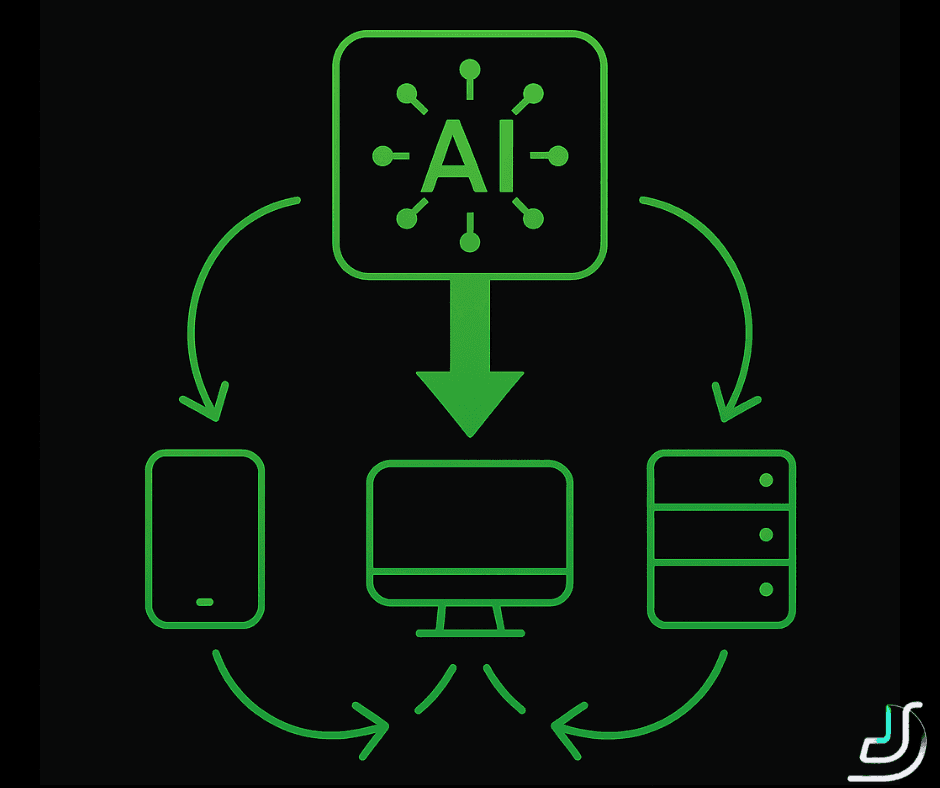
Most production deployments use hybrid architecture: edge inference for real-time monitoring, cloud-based training and aggregate analytics, periodic model updates pushed to edge.
Sensor fusion
Combining multiple sensor types (vibration + temperature + acoustic + current draw) typically outperforms single-sensor approaches. ML handles the integration.
ROI math that determines investment
The decision framework:
Investment scope:
- Sensor deployment ($500-$5K per equipment unit, depending on sophistication)
- Edge AI infrastructure ($2K-$10K per location)
- Cloud ML platform ($50K-$500K initial + ongoing)
- Integration with maintenance management systems ($30K-$150K)
- Training and operational adoption ($30K-$100K)
Expected returns:
- Unplanned downtime reduction: 30-50% typical
- Maintenance cost reduction: 15-25%
- Equipment lifespan extension: 10-20%
- Energy efficiency improvement: 5-15% (for energy-intensive equipment)
ROI typically positive within 12-18 months for high-value equipment. Equipment with low failure cost or low utilization rates may not justify investment.
Common implementation challenges
Data quality from old equipment
Legacy industrial equipment may have limited sensor capability. Adding sensors without disrupting operations requires careful planning.
Domain expertise gap
Predictive maintenance combines ML expertise with deep domain knowledge of specific equipment failure modes. Organizations frequently underestimate the domain expertise required.
Change management
Maintenance teams need to trust ML recommendations. Inaccurate early predictions destroy trust permanently. Conservative deployment with clear alerting thresholds prevents this.
Integration with existing CMMS
Most organizations have established maintenance management systems (Maximo, SAP PM, Infor EAM). Integration is non-negotiable for production deployment.
False positive management
Aggressive thresholds produce false alarms that waste maintenance team time. Conservative thresholds miss failures. Tuning requires ongoing operational discipline.
Three deployment scenarios
Small facility: Single equipment type, basic sensor deployment, off-the-shelf ML platform. $80K-$200K initial + $40K-$100K/year.
Mid-size enterprise: Multi-equipment, multi-facility, integrated CMMS, edge AI deployment. $300K-$800K initial + $200K-$400K/year.
Enterprise predictive maintenance platform: Comprehensive deployment across all critical equipment, custom models, advanced analytics, organization-wide CMMS integration. $1M-$3M+ initial + $500K-$1.5M+/year.
Final framing
ML-driven predictive maintenance is among the highest-ROI AI applications in industry — when deployed against appropriate equipment with proper architectural patterns. The organizations leading their categories deploy it with discipline: domain expertise, sensor strategy, edge/cloud architecture, conservative thresholds, integration with existing maintenance workflows.
The compound benefits over years are substantial. Manufacturing and operations-intensive organizations that build predictive maintenance capabilities now will dominate their categories by 2027 — both in cost economics and operational reliability.
Ready to scope a predictive maintenance project? Run the Project Estimator for a deterministic ballpark, or book a 45-minute Discovery with our AI engineers — we'll review your equipment, sensor capability, and operational priorities, and tell you honestly which deployments fit your scope.
Talk to the team behind this
Building something like this in production?
Our senior engineers ship this kind of work for real teams. 45-minute call, no pitch deck — just architecture, trade-offs, and whether we're the right fit for your problem.